Medical Expertise at Luxe Aesthetic Surgery
Luxe Aesthetic Surgery & Medical Spa is led by Haimesh Shah, MD, RPVI , a physician specializing in cosmetic surgery, body contouring, laser procedures, and venous medicine. Dr. Shah is a Diplomate of the American Board of Laser Surgery, American Board of Venous & Lymphatic Medicine, American Board of Wound Management, and American Board of Internal Medicine. He also holds the Registered Physician in Vascular Interpretation (RPVI) credential and has contributed to peer-reviewed medical research.
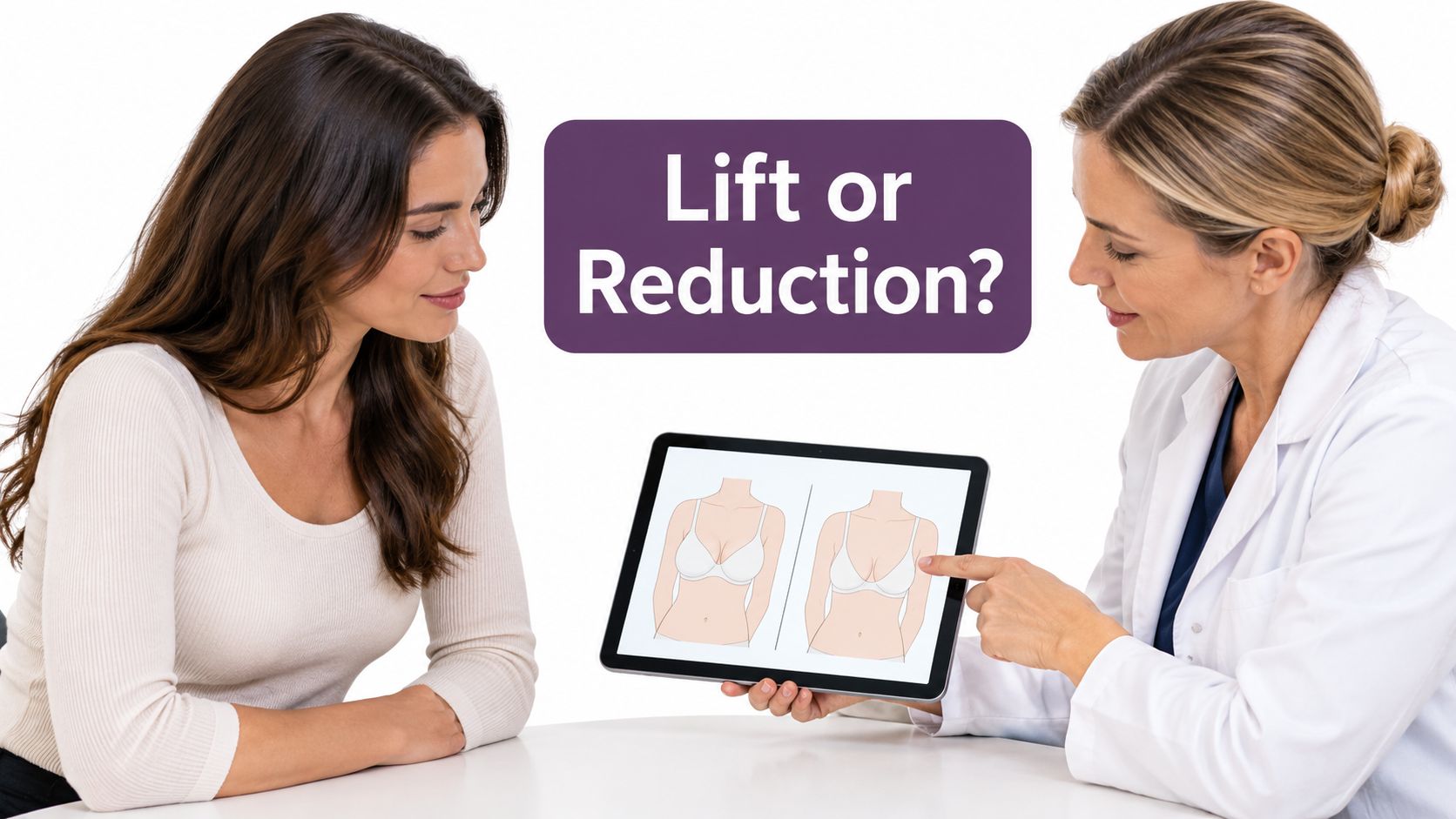
A common piece of advice about breast lift vs reduction is to choose based on whether you want your breasts to look higher or smaller. That's a useful starting point, but it misses the question that often matters most: are you mainly concerned about breast position, breast weight, or symptoms caused by that weight?
Both procedures reshape the breast and can reposition the nipple and areola. A lift primarily addresses sagging while generally preserving volume; a reduction also removes breast tissue to make the breast smaller and lighter. The right choice depends on your goals, anatomy, symptoms, health history, and how you feel about trade-offs such as scars, recovery, and possible changes in sensation. A consultation is needed to assess those factors for you.
Table of Contents
- Why the Breast Lift or Reduction Decision Matters
- How Each Procedure Changes Shape and Volume
- Side-by-Side Criteria for Breast Lift and Reduction
- Scarring, Recovery, and Sensation Trade-Offs
- Which Patients Benefit Most From Each Procedure
- Weighing Complication Risks Against Long-Term Satisfaction
- Choosing the Right Option and Next Steps
Why the Breast Lift or Reduction Decision Matters
A breast lift and a breast reduction aren't interchangeable just because both can raise the breast and improve its contour. If your breast size feels right but the tissue has sagged, removing substantial volume may not match your goal. If heaviness is contributing to discomfort or restricting activity, lifting the breast without meaningfully reducing its weight may leave an important concern unaddressed.
| Main concern | Procedure to discuss | Central trade-off |
|---|---|---|
| Sagging, with acceptable breast volume | Breast lift | Improves position and shape without aiming for a major size reduction |
| Breast weight, size, or related symptoms | Breast reduction | Removes tissue to reduce volume while also reshaping and elevating the breast |
| Both heaviness and sagging | Individualized plan | Tissue removal and lifting may be considered together, depending on your anatomy and goals |
Start with the problem you want to solve
Consider what prompted you to explore surgery. Are you bothered most by the position of your breasts, or by their size and weight? Do you have symptoms such as neck, shoulder, or back discomfort, skin irritation, or difficulty with activities? Are you comfortable with your current volume, or do you want a smaller breast?
Those answers help guide a conversation, but they don't decide candidacy on their own. A surgeon also needs to consider breast shape and tissue distribution, skin quality, medical history, and what you expect the procedure to change.
A useful distinction: A lift is primarily about shape and position. A reduction adds a deliberate decrease in breast volume.
Treating the procedures as synonyms can create a mismatch between what someone wants and what the operation is designed to do. The comparison below focuses on the differences that can shape your decision, including volume, symptoms, scars, recovery, and sensation.
How Each Procedure Changes Shape and Volume
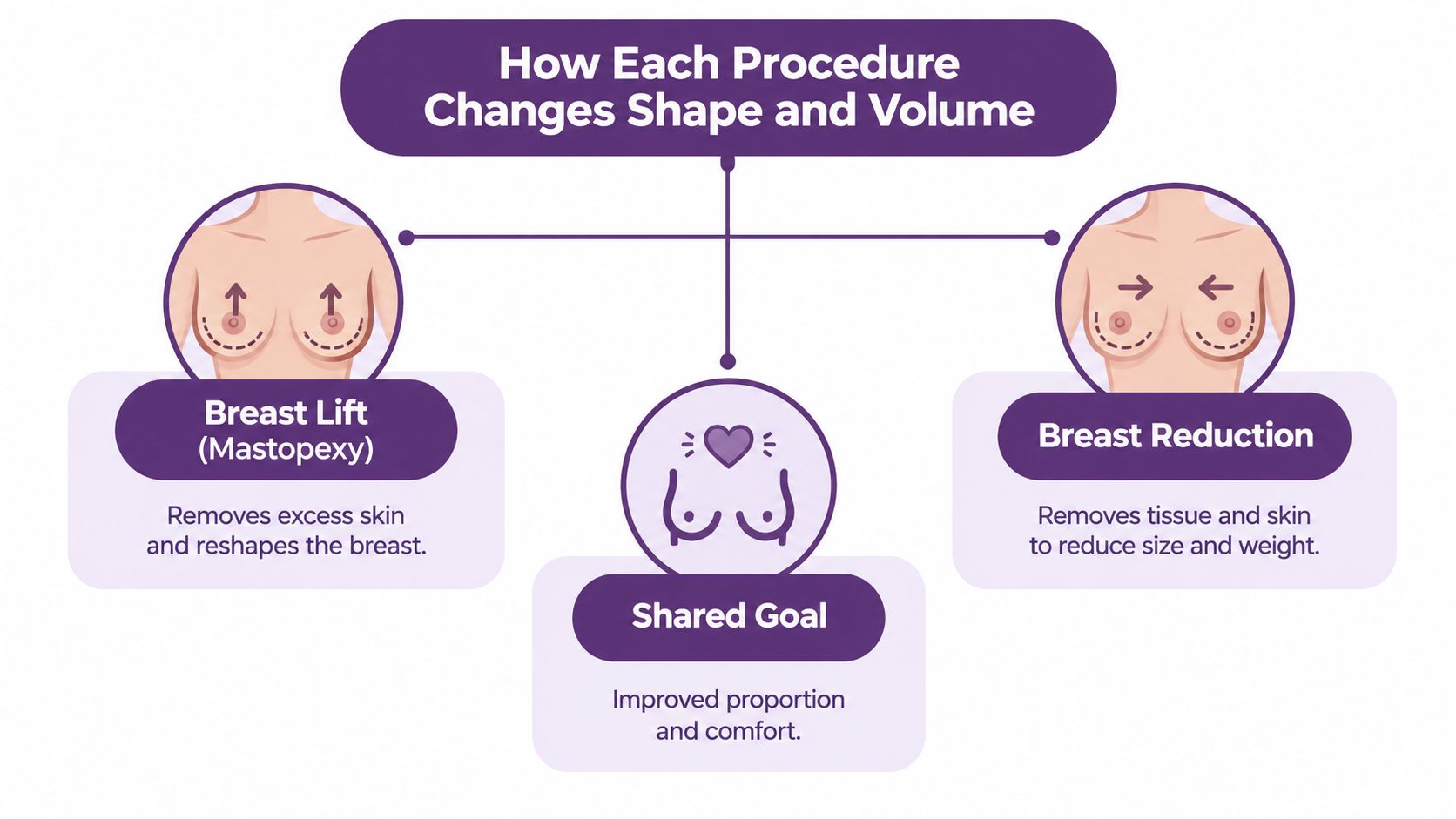
A breast lift, or mastopexy, changes the breast's position and contour. The surgeon removes excess skin, reshapes the remaining tissue, and moves the nipple–areola complex higher. The aim is generally to preserve breast volume rather than make the breast substantially smaller. Research on mastopexy and reduction mammoplasty describes how lifting and reshaping differ from removing tissue to reduce breast size.
Reduction also reshapes and raises the breast, while removing breast tissue, fat, and skin. Removing that tissue reduces breast volume and weight. For someone seeking less size or relief from symptoms associated with breast mass, this change may be central to their goals.
What a lift can and can't do
A lift can change the breast's outline and nipple position while generally preserving its volume. It can't reliably create a major size reduction. A lift can change how full the breast looks in a bra, but the amount of breast tissue remains largely unchanged because the procedure is not designed to remove substantial tissue.
Breast shape and volume can change over time, including after nursing. This resource on managing breast changes after weaning discusses those changes. For a closer look at the procedure, read about how breast lifts work.
What reduction adds
Reduction removes tissue as well as skin, then reshapes and raises the breast. The result is intended to be smaller and lighter, and may include less fullness in the upper part of the breast. If upper-pole fullness matters to you, raise that preference in consultation so the surgeon can explain what the planned reshaping may achieve.
Both procedures require careful planning to protect the blood supply to the nipple–areola complex. Possible complications include delayed wound healing, asymmetry, altered sensation, and partial or complete nipple loss. These risks are part of counseling, not proof that a procedure has failed. Their relevance depends on the person and surgical plan, and neither operation guarantees a particular contour or sensation outcome.
Side-by-Side Criteria for Breast Lift and Reduction
The table below is a decision aid, not a diagnosis. Some features, such as nipple repositioning and the need to plan for scars, may apply to both procedures. The key differences are whether substantial tissue is removed and whether reducing breast weight is part of the intended result.
| Factor | Breast Lift | Breast Reduction |
|---|---|---|
| Primary goal | Raises and reshapes the breast | Reduces breast size and weight while reshaping and elevating it |
| Volume change | Generally preserves volume; not designed for major size reduction | Removes breast tissue, fat, and skin to decrease volume |
| Common reason to discuss it | Sagging or nipple position is the main concern, and existing volume feels acceptable | Breast size or weight is a concern, including when it contributes to symptoms or activity limits |
| Nipple–areola complex | May be repositioned higher | Repositioning is part of reshaping the smaller breast |
| Scarring | Depends on the amount of skin removal and the technique | Can be more extensive because tissue is removed as well as skin |
| Recovery | Healing and activity guidance depend on the surgical plan and the individual | Activity restrictions and supportive garments should be planned with the care team |
| Sensation | Changes are possible and should be discussed | Changes are possible and should be discussed |
Use the rows to clarify your priorities
If your volume feels appropriate, the lift column may better describe the change you're seeking. If you want your breasts to be smaller and lighter, or symptoms make breast weight a concern, reduction may be more relevant to discuss. If you're uncertain about your current bra fit, a resource on bra sizing for everyday comfort can help you think about fit. It can't determine which operation is appropriate or predict a surgical result.
Don't treat any single row as a verdict. For example, a person can have sagging and also want a smaller breast, while another may have a lower nipple position but no interest in volume reduction. The useful question is how your symptoms and goals line up with the operation's intended changes.
Scarring, Recovery, and Sensation Trade-Offs
Scars and healing affect daily life after surgery, so consider them alongside the changes you want. A reduction removes breast tissue as well as skin, and may leave more extensive scars than some lift techniques. Patient information from UK breast units describes the anchor or inverted-T pattern: a scar around the areola, one running down the breast, and one along the fold beneath it.
The pattern depends on the operation and your individual plan. Wound-healing problems can occur where the vertical and horizontal scars meet. Swelling and bruising fade over weeks, and the final shape and scar appearance take months to settle. The Luxe guide to breast lift scars explains what scar patterns after a lift may involve.
Plan around healing, not just the operation
Tenderness, swelling, and bruising are expected after breast reduction. Activity limits commonly last several weeks, and your surgeon will set the exact timeline for your plan. Wearing an approved surgical bra during healing may also be part of your instructions. Tissue removed, surgical technique, wound healing, work demands, and exercise habits all affect when you can resume usual activities.
Recovery guidance is personal. Ask your surgeon when you can return to strenuous tasks and specific activities, and how much time away from work to arrange. A general patient guide cannot set your individual schedule.
Sensation can change after either procedure, although a change is not certain. The possibility depends on the surgical approach and your circumstances. Discuss sensation and any future breastfeeding priorities before surgery, and ask what changes your surgeon considers possible for your plan. These are counseling topics, not automatic signs that an operation has failed.
Which Patients Benefit Most From Each Procedure
A person who is satisfied with breast volume but bothered by sagging may want to discuss a lift. For example, someone may notice that the breast sits lower after pregnancy, aging, or a change in weight, while feeling that the size itself is comfortable. In that situation, the goal may be to raise and reshape rather than intentionally make the breast smaller.
A different person may have concerns that begin with weight and symptoms. Breast mass can contribute to neck, shoulder, or back symptoms, limit activity, or cause skin irritation. If a person's goal includes reducing breast size and weight, reduction is the procedure to ask about. The decision isn't just about whether the breasts look saggy: tissue distribution, symptoms, desired volume, skin quality, and tolerance for scars all matter.

Think beyond a target cup size
Reduction can be discussed as a functional as well as cosmetic procedure. In an adolescent reduction-mammoplasty cohort, satisfaction-with-breasts scores on the BREAST-Q rose from 24.1 before surgery to 92.6 after surgery, while psychosocial-well-being scores rose from 37.7 to 90.4. Both changes were statistically significant at P < .001 (the cohort study and its reported outcomes). These findings are about that cohort; they can't predict what any individual will experience.
For some people, symptoms and comfort matter more than reaching a particular cup size. For others, the priority is position and contour while keeping their current volume. If you're weighing those concerns, questions about whether breast reduction may fit your goals can help you prepare for a consultation.
Neither example determines who qualifies for surgery. Your health history, anatomy, expectations, and the surgeon's assessment all factor into a recommendation.
Weighing Complication Risks Against Long-Term Satisfaction
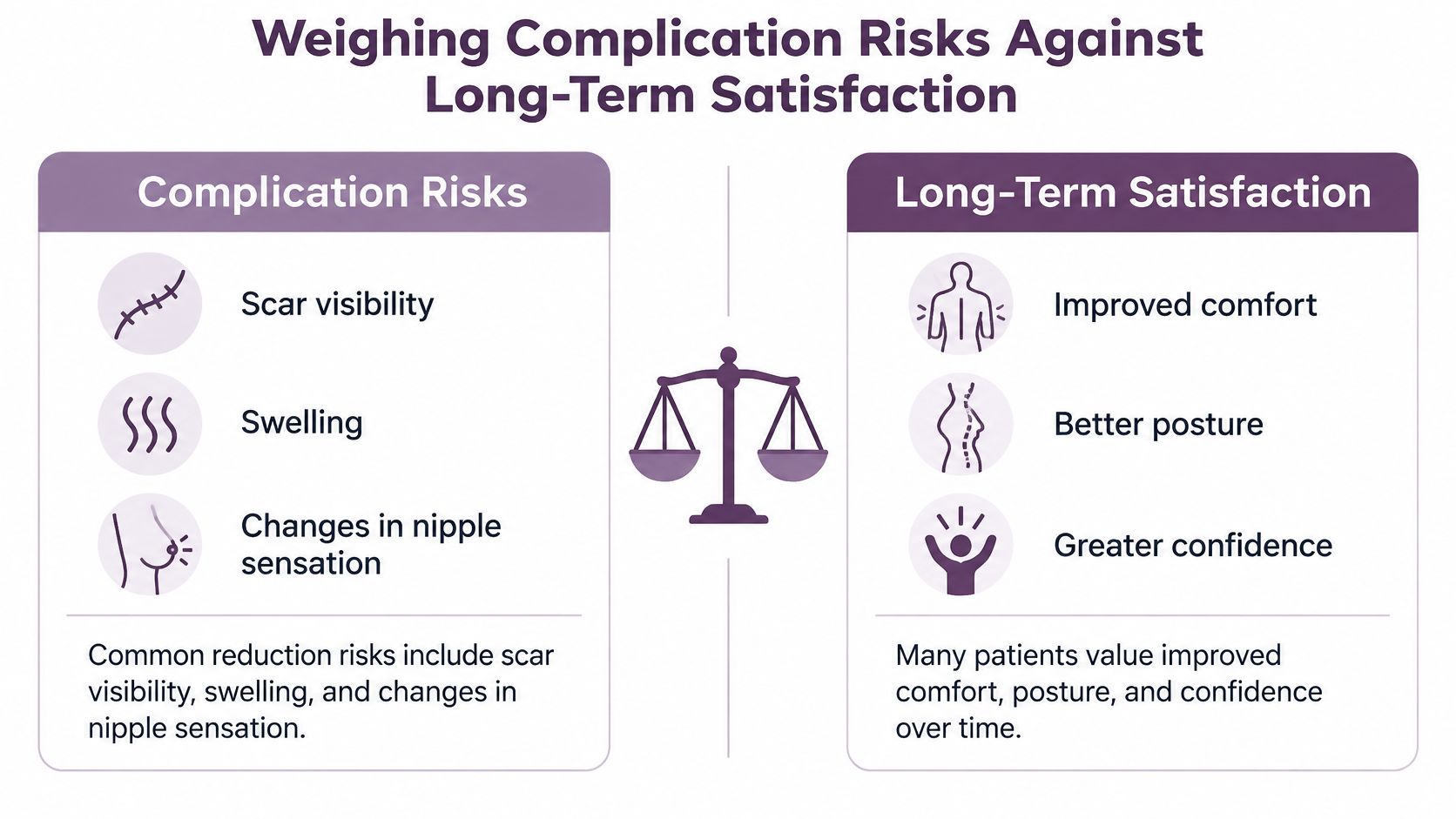
Complications belong in the risk discussion, but they do not by themselves predict how satisfied a patient will be. Reduction complications can include wound separation, seroma, asymmetry, changes in sensation, and fat necrosis. A patient-reported analysis found an average complication rate of approximately 15.1%, alongside significant improvement across all BREAST-Q quality-of-life domains (a BREAST-Q analysis of complication rates and quality-of-life outcomes).
A separate BREAST-Q analysis found no significant difference in postoperative satisfaction between patients who experienced complications and those who did not. It also associated obesity, hypertension, and diabetes with complications. These study findings do not make complications harmless or predict an individual patient's risk.
Make risk part of informed consent
Risks vary with a person's health and the planned technique. Smoking, diabetes, obesity, breast size, skin quality, and prior surgery may all matter. Prior breast irradiation also calls for individualized discussion. As noted earlier, a study of previously irradiated breasts found a dehiscence rate of 29% after mastopexy and 0% after reduction mammoplasty. Because this was a high-risk population, those figures should not be generalized to routine primary surgery.
A useful consultation covers expected benefits and what care might be needed if healing is difficult. Ask about wound care, nipple sensation, breastfeeding, scar management, and how future pregnancy or major weight change could affect breast shape. A lower complication risk matters only in context: the procedure must also address the concern that matters most to you. The trade-off should fit your health and goals.
Choosing the Right Option and Next Steps
The right choice depends on more than cup size. If you want the breasts lifted and hope to preserve upper-pole fullness, ask how each goal could be addressed. A lift can raise the breast without restoring lost fullness, while a reduction removes tissue and may leave less volume than expected. A combined or staged approach may be discussed, depending on your anatomy, health history, and surgeon's assessment.
Bring clear priorities to the consultation. Describe symptoms and activity limits, how much volume you hope to preserve or reduce, and your concerns about scars, sensation, and recovery. These details help connect the procedure to what you want to change.
Plan for your own recovery
Recovery depends on the operation and your circumstances. Recovery guidance for reduction commonly includes several weeks of activity limits and continuous wear of a surgical bra, and your surgeon will confirm the schedule for your plan. Ask when you can resume specific activities rather than treating a general timeline as a personal return-to-exercise date.
The practice serves patients across Los Angeles, Santa Barbara, and Ventura counties and offers breast lift and breast reduction. Medical Director Haimesh Shah, MD, RPVI, holds board certifications in venous and lymphatic medicine, laser surgery, and internal medicine. Awake procedures under local anesthesia depend on candidacy; your medical history and the planned procedure help determine whether this approach is an option.
For a personalized discussion, visit Luxe Aesthetic Surgery & Medical Spa. Bring your questions about symptoms, desired volume, scars, sensation, and recovery so you can discuss which trade-offs fit your priorities. Request a consultation to explore which option, if either, may suit your needs.