Medical Expertise at Luxe Aesthetic Surgery
Luxe Aesthetic Surgery & Medical Spa is led by Haimesh Shah, MD, RPVI , a physician specializing in cosmetic surgery, body contouring, laser procedures, and venous medicine. Dr. Shah is a Diplomate of the American Board of Laser Surgery, American Board of Venous & Lymphatic Medicine, American Board of Wound Management, and American Board of Internal Medicine. He also holds the Registered Physician in Vascular Interpretation (RPVI) credential and has contributed to peer-reviewed medical research.
Lipo 360 Versus Traditional Liposuction Body Contouring
At Luxe Aesthetic Surgery & Medical Spa, we are continually dedicated to redefining confidence by providing premier cosmetic surgery and advanced body contouring across Southern California. Under the medical direction of Dr. Haimesh Shah, MD, RPVI, our practice emphasizes a patient-centric philosophy grounded in safety, comfort, and natural-looking results. In recent years, the terminology surrounding body contouring has expanded rapidly, and patients often arrive at our clinics in Beverly Hills, Westlake Village, or our many other locations with specific questions about the latest techniques. One of the most common inquiries we receive during initial assessments involves understanding the precise differences between Lipo 360 and traditional liposuction.
For patients who are actively researching ways to refine their midsection, navigating the vast array of available surgical techniques can feel overwhelming. Many individuals understand that liposuction removes fat, but they may not fully grasp how a circumferential approach differs from standard spot-treatment, or how these procedures compare to more invasive surgeries like abdominoplasty. As a practice with more than a decade of specialized experience performing awake surgeries exclusively under local anesthesia, we aim to provide clarity. This comprehensive guide explores the anatomical focus of Lipo 360, how it contrasts with traditional liposuction, the physiological benefits of tumescent local anesthesia, and the clinical factors that surgeons evaluate when determining the most appropriate customized treatment protocol for each unique individual.
Defining the 360-Degree Approach to Body Contouring
To understand Lipo 360, it is helpful to first conceptualize the human torso not as a flat surface, but as a three-dimensional cylinder. Historically, liposuction was often treated as an localized spot-reduction tool. A patient might have fat removed exclusively from the lower abdomen or solely from the flanks (commonly referred to as “love handles”). While this localized approach successfully removes adipose tissue from the targeted zone, it can sometimes leave adjacent areas looking disproportionate. If the abdomen is perfectly flat but the hips and lower back retain excess fat, the overall silhouette may lack harmony.
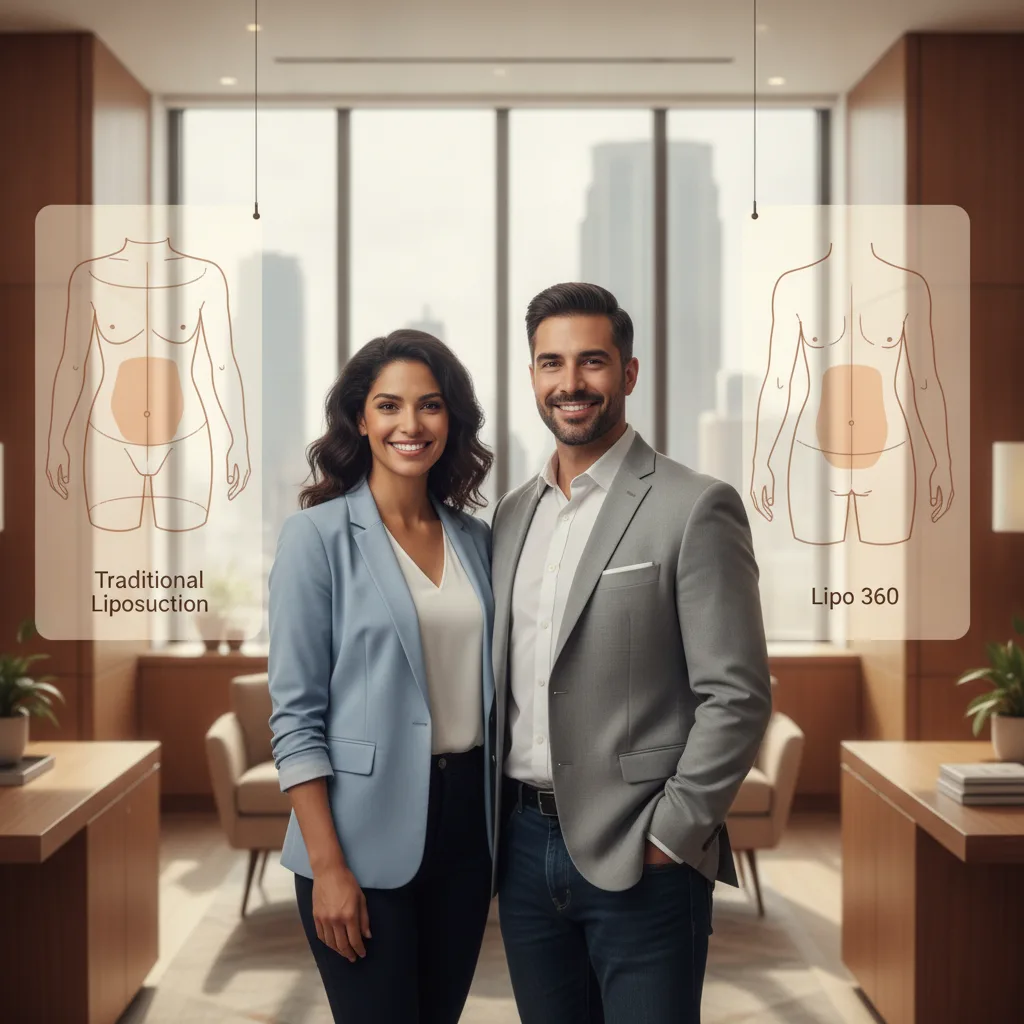
Lipo 360, which stands for 360-degree liposuction, is a comprehensive body contouring methodology that addresses the entire midsection circumferentially. Instead of isolating a single pocket of fat, the surgeon treats multiple contiguous areas around the torso in a single continuous session. While the exact treatment plan is always customized to the individual’s unique anatomy, a standard Lipo 360 procedure typically encompasses the upper and lower abdomen, the obliques, the flanks, the mid-back, and the lower back. Some anatomical variations may also include the upper back or the bra roll area, depending on the patient’s aesthetic aspirations and baseline physique.
According to resources provided by the American Society of Plastic Surgeons (ASPS), Lipo 360 specifically refers to the removal of fat from the abdomen, hips, flanks, and back, but it does not include the surgical excision of excess skin. The primary objective of this circumferential approach is to create a seamless, cohesive transition between the front, sides, and back of the torso. By contouring the entire trunk, surgeons can sculpt a more defined waistline, enhance the natural curvature of the hips, and create a highly balanced, harmonious result from every possible angle.
Traditional Spot Liposuction Versus Comprehensive Lipo 360
When patients explore our surgical procedure options, they often ask why a surgeon might recommend a 360-degree approach over traditional spot liposuction. The distinction lies primarily in the scope of the procedure and the holistic vision of the final outcome.
Traditional liposuction is highly effective for patients who have only one specific area of concern. For instance, a patient might possess a naturally lean physique but struggles with a persistent pocket of genetic fat beneath the chin, or perhaps a localized accumulation of fat on the inner thighs. In these scenarios, targeted traditional liposuction is entirely appropriate. However, when the goal is to transform the core and waistline, treating only the anterior (front) abdomen can yield visually unbalanced results. If a significant volume of fat is removed from the stomach, the untreated flanks and back fat may suddenly appear much more prominent by comparison.
Lipo 360 mitigates this risk of disproportion by treating the entire circumference of the midsection. Surgeons approach the body holistically, meticulously removing fat and blending the transition zones between the abdomen, obliques, and back. This requires a high degree of artistic vision and technical proficiency, as the surgeon must continuously evaluate the patient’s proportions from multiple vantage points throughout the surgery. Ultimately, Lipo 360 is not a different type of technology or surgical instrument; rather, it is a comprehensive surgical philosophy that prioritizes total-torso harmony over isolated fat reduction.
Procedure Comparison Overview
To further clarify how these distinct procedures contrast, the following table summarizes the primary clinical features of traditional spot liposuction, comprehensive Lipo 360, and surgical abdominoplasty.
| Consideration / Feature | Traditional Spot Liposuction | Comprehensive Lipo 360 | Tummy Tuck (Abdominoplasty) |
|---|---|---|---|
| Primary Clinical Objective | Isolated fat volume reduction | Comprehensive circumferential fat contouring | Excess skin excision and muscle repair |
| Anatomical Focus | Single localized areas (e.g., lower abdomen only, thighs, arms) | 360-degree midsection (abdomen, flanks, hips, lower/mid back) | Primarily the anterior abdominal wall |
| Skin Excision | No skin removal involved | No skin removal involved | Extensive surgical removal of lax skin |
| Muscle Repair (Diastasis Recti) | Not addressed | Not addressed | Suturing of separated abdominal muscles |
| Typical Anesthesia Method | Local tumescent anesthesia | Local tumescent anesthesia | Often requires general anesthesia |
The Awake Liposuction Advantage: Tumescent Local Anesthesia
At Luxe Aesthetic Surgery & Medical Spa, our defining hallmark is the exclusive use of awake surgeries performed under local anesthesia. This methodology is scientifically known as Tumescent Local Anesthesia (TLA). Understanding the mechanism of tumescent anesthesia is critical for patients evaluating their safety and recovery options.
Historically, large-volume liposuction was routinely performed under general anesthesia, which requires intubation and completely systemic unconsciousness. General anesthesia carries inherent cardiovascular and respiratory risks, and it often results in a prolonged, groggy postoperative recovery period. In contrast, the tumescent technique involves the subcutaneous infiltration of a specialized, highly dilute fluid consisting primarily of sterile saline, lidocaine (a local anesthetic), and epinephrine (a capillary vasoconstrictor).
When this tumescent fluid is introduced into the targeted fat layers, it causes the adipose tissue to swell and become firm (tumescent). The lidocaine profoundly numbs the entire surgical field, allowing the patient to remain comfortably awake, alert, and responsive throughout the procedure without experiencing sharp surgical pain. Simultaneously, the epinephrine temporarily constricts the localized blood vessels. According to peer-reviewed data published by the National Institutes of Health (NIH), tumescent local anesthesia is widely regarded as an incredibly safe and effective method that drastically minimizes intraoperative blood loss and postoperative bruising.
Because the patient remains awake, the surgeon benefits from dynamic positioning. An awake patient can be asked to stand up, turn over, or flex their muscles during the procedure. This active participation allows the surgeon to evaluate how the newly contoured tissues drape under the natural force of gravity, leading to far more precise and symmetrical sculpting—an advantage that is particularly crucial when performing a circumferential procedure like Lipo 360. Furthermore, because there is no systemic general anesthesia to clear from the body, patients typically experience a much faster, smoother transition into the initial recovery phase, often walking out of the clinic shortly after the procedure concludes.
Clarifying Lipo 360 vs. Tummy Tuck (Abdominoplasty)
Another common source of confusion in body contouring consultations is the distinction between Lipo 360 and a tummy tuck. While both procedures aim to improve the appearance of the midsection, they treat entirely different anatomical tissues.
Lipo 360 strictly targets subcutaneous adipose tissue (fat). It utilizes a small, hollow cannula to suction fat cells out of the body. It does not tighten loose skin, nor does it repair damaged underlying musculature.
A tummy tuck, or abdominoplasty, is a more invasive surgical procedure designed to address structural tissue laxity. Following significant weight loss or pregnancy, many individuals experience a condition known as diastasis recti, where the vertical abdominal muscles separate and weaken. Additionally, the skin stretched by these events often loses its natural elasticity, leaving a sagging “apron” of loose skin on the lower abdomen. According to the American Society of Plastic Surgeons (ASPS), a tummy tuck is indicated when there is a noticeable amount of sagging skin and underlying muscle laxity. During an abdominoplasty, the surgeon makes a horizontal incision across the lower abdomen, surgically sutures the separated muscles back together to create a firm internal corset, pulls the skin taut, and permanently excises the excess tissue.
During an individualized consultation, the physician evaluates the patient’s skin elasticity, muscle tone, and fat distribution to determine which procedure is anatomically appropriate. If a patient presents with significant skin overhang and weakened muscles, Lipo 360 alone will not resolve those structural issues, and an abdominoplasty may be recommended. Conversely, if a patient has firm, highly elastic skin and good muscle tone but struggles with stubborn fat deposits, Lipo 360 is typically the ideal intervention. In some cases, patients require a combination of both techniques to achieve their aesthetic goals.
Evaluating Ideal Patient Candidacy Objectively
Cosmetic surgery is highly individualized, and clinical candidacy depends on a variety of physiological and lifestyle factors. Ideal candidates for awake Lipo 360 generally present with specific clinical characteristics that facilitate optimal outcomes.
Surgeons typically look for patients who are at or very near their ideal target body weight. Liposuction is a body contouring procedure, not a weight-loss solution. It is designed to remove localized, diet-and-exercise-resistant fat pockets rather than to significantly lower a patient’s overall body mass index (BMI). Individuals who have maintained a stable weight for at least six months prior to surgery generally experience the most predictable and long-lasting aesthetic results.
Skin elasticity is another critical metric. Because Lipo 360 removes the fat that supports the overlying skin, the skin must possess enough inherent elasticity to naturally retract and shrink-wrap around the newly sculpted muscular contours. Younger patients, or those who have not experienced massive weight fluctuations, typically exhibit strong skin elasticity. If mild skin laxity is present, surgeons sometimes incorporate advanced minimally invasive skin-tightening technologies, such as Renuvion J-Plasma, during the Lipo 360 procedure to encourage deep dermal contraction.
Overall health is paramount. Candidates are typically non-smokers in good cardiovascular health, free from severe systemic illnesses that could impair healing. During an in-person consultation, your doctor will evaluate your comprehensive medical history, current medications, and anatomical baseline to formulate a safe, personalized surgical plan.
The Patient Journey: Consultation to Recovery
The clinical workflow for awake Lipo 360 is meticulously designed to prioritize patient safety and comfort at every phase. While every patient’s journey is unique, the general sequence of events follows a standardized medical protocol.
The Consultation Phase
The process always begins with a thorough clinical assessment. During this meeting, the medical director evaluates the patient’s anatomical structure, discusses their aesthetic goals, and carefully explains the mechanics of tumescent local anesthesia. Pre-operative instructions are provided, which commonly include pausing certain over-the-counter supplements or medications that may thin the blood, as well as optimizing hydration and nutrition in the weeks leading up to the procedure.
The Surgical Procedure
On the day of surgery, the patient remains awake but may be offered a mild oral sedative to encourage relaxation. The targeted 360-degree zones are carefully marked while the patient is standing. Once in the surgical suite, the specialized tumescent fluid is gently infused into the abdominal, flank, and back regions. After the area is profoundly numb, the surgeon makes several very small, strategically placed micro-incisions—often hidden in natural body creases. A blunt-tipped microcannula is then inserted to delicately dislodge and suction away the unwanted fat cells. Because the patient is awake, they can comfortably shift positions, ensuring the surgeon can sculpt the entire circumference of the torso seamlessly.
The Recovery Timeline
Recovery from awake Lipo 360 is generally more streamlined than recovery from procedures performed under general anesthesia, though it still requires adherence to strict postoperative protocols. Typical recovery guidelines suggest the following progression:
- Days 1 to 3: Patients commonly experience mild to moderate swelling, localized soreness (often described as feeling akin to an intense muscular workout), and fluid drainage from the micro-incisions. Wearing a specialized medical-grade compression garment is essential during this phase to minimize edema and support the new contours. Patients are encouraged to take light, short walks to promote healthy blood circulation.
- Weeks 1 to 2: Most patients feel comfortable returning to light desk work or non-strenuous daily activities within the first week. Swelling begins to gradually subside, though the compression garment must usually be worn 24 hours a day. During this timeframe, surgeons frequently advise patients to begin specialized post-operative lymphatic drainage massages, which help accelerate the removal of localized fluid build-up and prevent the formation of rigid scar tissue underneath the skin.
- Weeks 3 to 6: The majority of the acute swelling resolves. Patients are often cleared to slowly resume more vigorous cardiovascular exercises and heavier lifting, depending on their individual healing progress. The final contoured results begin to become highly visible, though subtle micro-swelling can sometimes take several months to completely dissipate.
Integrating Complementary Aesthetic Modalities
Because Lipo 360 addresses the entirety of the midsection, it often serves as a foundational procedure that patients choose to combine with other aesthetic enhancements. A highly popular integration is autologous fat transfer. The healthy, viable fat cells extracted from the abdomen and flanks during Lipo 360 can be carefully purified and strategically re-injected into other areas of the body that lack volume. This biocellular technique is frequently utilized in procedures such as the Brazilian Butt Lift (BBL) or natural facial fat grafting, allowing patients to achieve a comprehensive, full-body transformation using their own organic tissue.
Additionally, patients utilizing their dedicated recovery period often choose to address other cosmetic or vascular concerns simultaneously. For example, individuals bothered by the appearance of spider veins or small varicose veins on their lower extremities may integrate minimally invasive vein treatments like sclerotherapy into their overarching treatment timeline. By consolidating their aesthetic treatments under the guidance of a comprehensive medical spa and surgical team, patients can efficiently optimize their results while minimizing total downtime.
Moving Forward with Confidence
Choosing to undergo cosmetic surgery is a deeply personal decision that requires access to accurate, transparent, and authoritative medical information. Understanding the anatomical focus of Lipo 360, the distinct advantages of tumescent awake liposuction, and the precise differences between fat reduction and skin excision is the first step toward achieving your aesthetic aspirations.
At Luxe Aesthetic Surgery & Medical Spa, we are committed to building enduring patient-provider relationships grounded in trust, comprehensive communication, and direct access. We believe that every body is unique, and therefore every surgical approach must be carefully tailored to the individual. If you are considering body contouring and wish to learn more about how a circumferential approach might align with your personal goals, we encourage you to schedule an individualized consultation with Dr. Haimesh Shah. Together, we can evaluate your anatomy, discuss your vision, and design a customized treatment protocol to help you look and feel your absolute best.