Medical Expertise at Luxe Aesthetic Surgery
Luxe Aesthetic Surgery & Medical Spa is led by Haimesh Shah, MD, RPVI , a physician specializing in cosmetic surgery, body contouring, laser procedures, and venous medicine. Dr. Shah is a Diplomate of the American Board of Laser Surgery, American Board of Venous & Lymphatic Medicine, American Board of Wound Management, and American Board of Internal Medicine. He also holds the Registered Physician in Vascular Interpretation (RPVI) credential and has contributed to peer-reviewed medical research.
After sclerotherapy, you may look down at your legs and wonder whether the bruising, tenderness, or darker vein lines are normal. You may also be trying to work out how to shower without losing your compression, whether you should walk or rest, and when it's safe to return to exercise. These practical details matter because recovery isn't passive. The habits you follow during the first days can support comfortable healing and a clearer final appearance.
Sclerotherapy aftercare centers on three priorities: compression, gentle movement, and skin protection. Your treating clinician's instructions always take priority, especially when the procedure involved larger veins, multiple treatment areas, or an underlying venous condition. For an overview of the treatment and the practice's approach to vein care, visit Luxe's sclerotherapy service.
Table of Contents
- Setting the Stage for Optimal Vein Recovery
- The Critical Role of Compression Therapy
- Navigating Activity and Movement Restrictions
- Managing Skin Changes and the Healing Timeline
- Recognizing and Responding to Complications
- Follow-Up Appointments and Long-Term Vein Health
Setting the Stage for Optimal Vein Recovery
Sclerotherapy closes selected veins by irritating the inside of the treated vessel. The body then gradually deals with the closed vein, while healthy veins continue carrying blood. That process takes time, so a vein can appear darker, firmer, or more noticeable before it fades.
The first day is usually about following the plan rather than judging the result. Keep the dressing or compression garment in place as directed, walk gently, and inspect the treated skin without repeatedly touching or pressing the injection sites. Mild redness, small bruises, tenderness, itching, or localized swelling can occur during ordinary healing.
Make recovery an active routine
A simple daily routine is often easier to follow than a long list of restrictions:
- Wear the prescribed compression: Use the stocking or wrap for the duration your clinician gave you.
- Walk at regular intervals: Gentle movement supports circulation without placing the pressure on the legs that comes with strenuous exercise.
- Protect treated skin: Avoid direct sun and intense heat while the injection sites are settling.
- Observe changes calmly: Note whether symptoms are stable, improving, or becoming more pronounced.
Compression helps keep treated vein walls collapsed. Walking discourages prolonged stagnation in the legs. Skin protection matters because recently treated areas can be more reactive, and sun exposure may make discoloration more noticeable.
Practical rule: Recovery should feel structured, not immobilizing. Move gently, protect the treatment area, and contact the clinic when symptoms are worsening rather than gradually settling.
Avoid making independent changes because one leg looks better than the other. Different veins can respond at different rates, and your clinician may have chosen a different compression or activity plan based on the vein pattern and treatment method. The safest recovery is the one that follows your specific instructions consistently.
The Critical Role of Compression Therapy
Compression is the central control point in sclerotherapy aftercare. A properly fitted medical garment or wrap applies steady pressure over the treated vessel, helping keep the vein walls together while the area heals. It also helps limit the space in which blood can collect, which is one reason immediate compression is used to reduce thrombus formation.
How long compression usually continues
Clinical recommendations vary according to the size of the treated veins and the provider's protocol. Cleveland Clinic advises support stockings or compression wraps for 3 to 7 days and recommends a 48-hour precaution period that includes avoiding aspirin, ibuprofen, hot baths, saunas, hot compresses, and direct sun exposure. Its sclerotherapy aftercare guidance reflects the short, focused compression period commonly used after treatment.
Other clinical protocols may use continuous compression immediately after treatment, followed by daytime wear for roughly 1 to 3 weeks. StatPearls states that dressings or stockings may remain in place for 7 days to promote vessel compression, while venous-disease guidance describes 1 week as a minimum and up to 3 weeks as a possible protocol depending on the case. The correct duration for you is the one prescribed by your treating clinician, not the shortest schedule you find online.
A practical pattern may look like this:
- Immediate application: Compression begins directly after treatment.
- Early continuous wear: Keep it on continuously for the initial period specified by your provider.
- Daytime transition: Some patients then move to daytime-only use for an additional period.
- Fit monitoring: Check the skin and circulation whenever the garment is removed or adjusted.
The garment should feel firm and supportive, not painfully tight. Remove wrinkles and bunching, because folds can create concentrated pressure points. Numbness, cool skin, unusual color change, or delayed capillary refill suggests that the garment may be too tight and warrants a call to the clinic. Do not just tolerate those symptoms or cut the stocking yourself.
Showering without disrupting care
Ask when the dressing or stocking may be removed before you shower. If your instructions allow removal, take the garment off carefully, inspect the skin, and use lukewarm rather than hot water. Don't scrub, exfoliate, massage, or apply heat to the injection sites. Pat the skin dry, and replace the garment smoothly as directed.
Keep a clean spare garment available if your provider has recommended one. That makes hygiene easier without creating a long gap in compression. If your instructions require continuous wear and you're unsure how to bathe safely, call the practice rather than guessing.
Compression isn't a substitute for movement, and movement isn't a substitute for compression. They address different parts of recovery. Patients who need additional guidance about swelling or fluid management can ask whether lymphatic massage at Luxe is appropriate, but treated veins shouldn't be massaged unless the treating clinician specifically recommends it.
Navigating Activity and Movement Restrictions
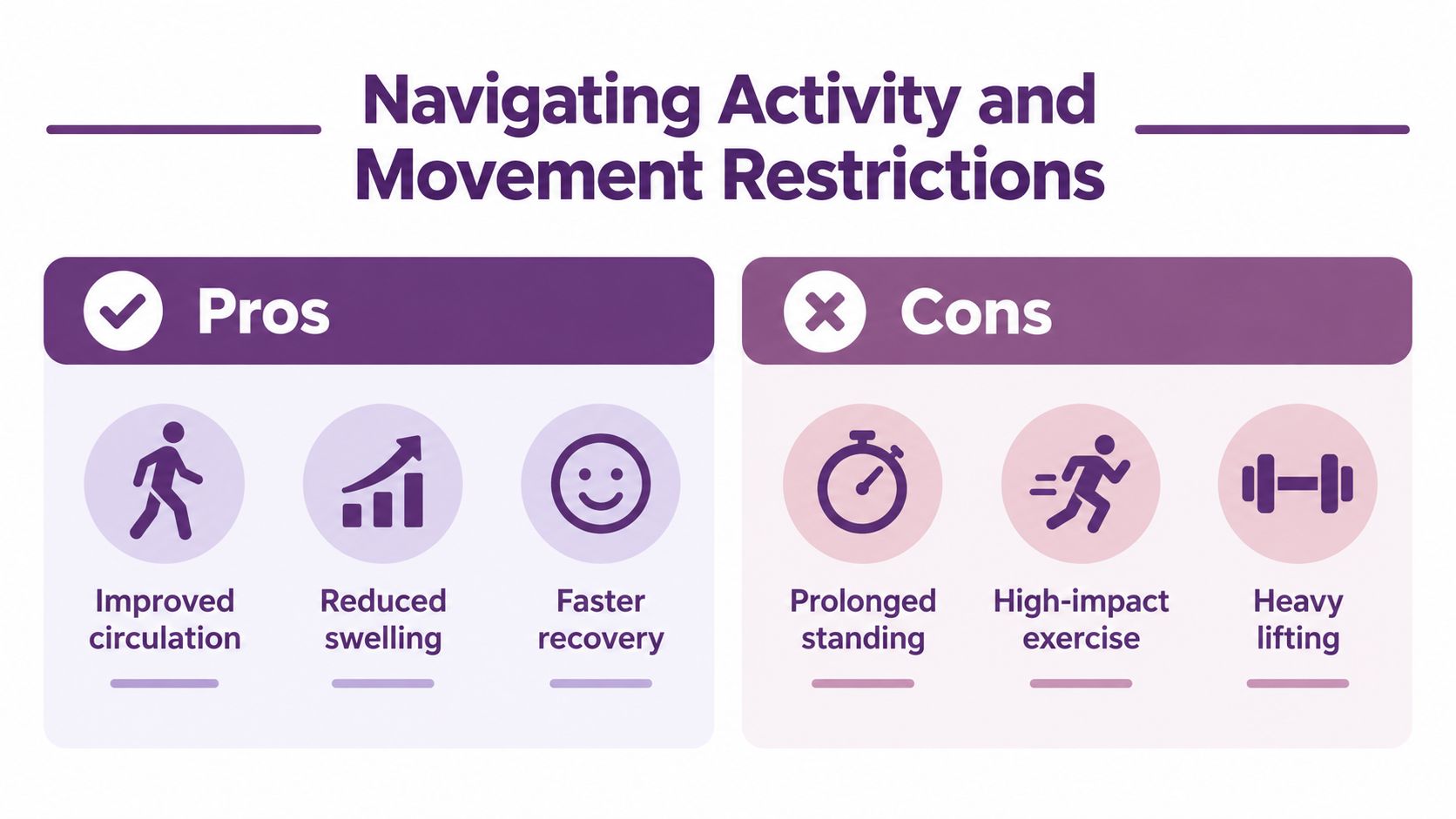
Bed rest is rarely the goal after sclerotherapy. Early ambulation is a recurring part of aftercare because gentle walking supports circulation without placing the same mechanical and pressure demands on the legs as running, lifting, or vigorous aerobic exercise.
Kaiser Permanente advises that patients should be able to walk right away and may do low-impact exercise such as walking or cycling each day, while avoiding strenuous activities until cleared. The Kaiser Permanente recovery guidance is consistent with a practical approach: keep the legs moving, but reduce intensity during the early healing window.
Choose movement that stays easy
A short walk is usually more useful than remaining still for a long period. Allina recommends 20-minute walks or bike rides once or twice daily, and University Hospitals advises 20 to 30 minutes of walking daily for two weeks. Follow your own clinician's plan if it differs, particularly if you have circulation concerns or received treatment for larger veins.
Use these signals to judge intensity:
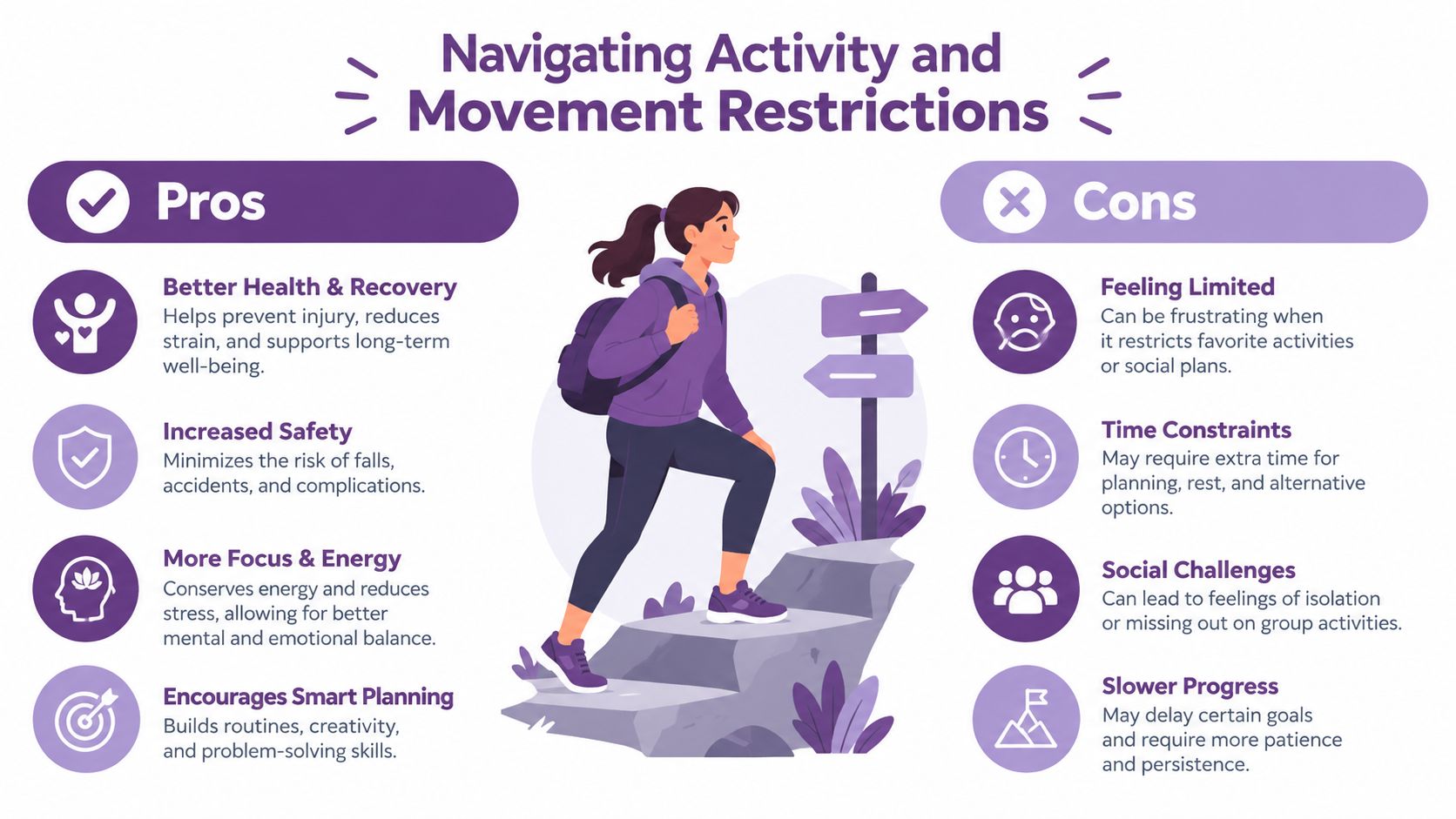
- Comfortable walking is appropriate: You should be able to move without escalating pain.
- Low-impact cycling may be suitable: Use it only if your provider has included it in your plan.
- Heavy lifting should wait: Straining can increase pressure through the legs while the treated vessels are healing.
- Running and aerobic exercise should wait for clearance: High-impact movement can worsen bruising, swelling, or irritation.
- Prolonged standing deserves attention: Change position and take brief walks rather than remaining stationary.
Treat heat and sun as recovery factors
Heat can increase vascular dilation and irritation during the early recovery period. Allina advises avoiding pools, hot tubs, and saunas for 10 days, while Cleveland Clinic's guidance includes avoiding hot baths, saunas, hot compresses, and direct sun exposure during the initial 48 hours. These recommendations differ in duration, so your provider's instructions should determine when you resume heat-based activities.
Sun protection remains important beyond the first day if bruising or discoloration is present. Cover treated areas with clothing, seek shade, and use the skin-protection approach recommended by your clinician. Don't use a tanning bed or deliberately expose the treatment area to strong sunlight while it's changing.
The trade-off is straightforward. Too little movement may leave you stiff and inactive. Too much intensity can increase bruising and swelling. The most reliable middle ground is frequent, gentle walking with a gradual return to more demanding exercise after clearance.
Managing Skin Changes and the Healing Timeline
A patient may notice a small bruise at an injection site first. Over the following days, the treated vein can look darker or feel slightly firm, and brown staining may appear along its path. These changes can be unsettling, especially when the original concern was cosmetic, but they don't automatically indicate that treatment has failed.
Bruising at injection sites is common and usually resolves within about a week, according to DermNet's sclerotherapy information. Brown pigmentation or staining occurs in about 30% of patients and may take many months to resolve. The appearance can improve unevenly, with one area clearing before another.
What normal healing can look like
During the early phase, expect gradual change rather than an immediate transformation:
- Redness or tenderness: These can occur around injection sites and should generally settle rather than intensify.
- Bruising: The color may change as the bruise clears.
- Temporary darkening: A treated vein may look more prominent before it becomes less visible.
- Brown staining: Pigmentation may persist after other symptoms have improved.
Use gentle skin care. Wash without scrubbing, avoid picking at crusted areas, and don't apply unapproved acids, retinoids, bleaching products, or abrasive tools to the treatment sites. If you need broader information about keeping a healing area clean and protected, this wound care guide offers practical background, but your vein provider's instructions remain specific to your procedure.
Sun exposure deserves particular attention because ultraviolet exposure can make post-treatment pigmentation more persistent or noticeable. Cover the area when practical and ask your clinician when sunscreen is suitable for the treated skin, especially if there are still open injection points.
Cleveland Clinic also recommends avoiding aspirin and ibuprofen during the first 48 hours after treatment. Don't stop a prescribed medication without medical advice. If you take blood thinners or have been told to use a particular pain reliever, confirm the plan with your treating clinician before changing anything.
Recognizing and Responding to Complications
The assumption that every post-treatment change is harmless can delay care. Most side effects are minor or self-limited, but measurable complications do occur, and a symptom that is severe, sudden, or worsening deserves attention rather than reassurance from an online checklist.
A Servier review reports hyperpigmentation in 10% to 30% of cases, telangiectatic matting in 15% to 24%, visual disturbances and migraines in 1.4% to 14%, deep venous thrombosis in 1% to 3%, edema of the injected extremity in 0.5%, nerve damage in 0.2%, and stroke in 0.01%. These figures are summarized in the Servier review of sclerotherapy complications.
Separate expected changes from warning signs
Mild bruising, localized tenderness, temporary itching, and limited swelling can occur during ordinary healing. Compression can also cause manageable skin problems such as blisters or folliculitis if it's applied improperly, which is why you should inspect the skin and report pressure-related injury.
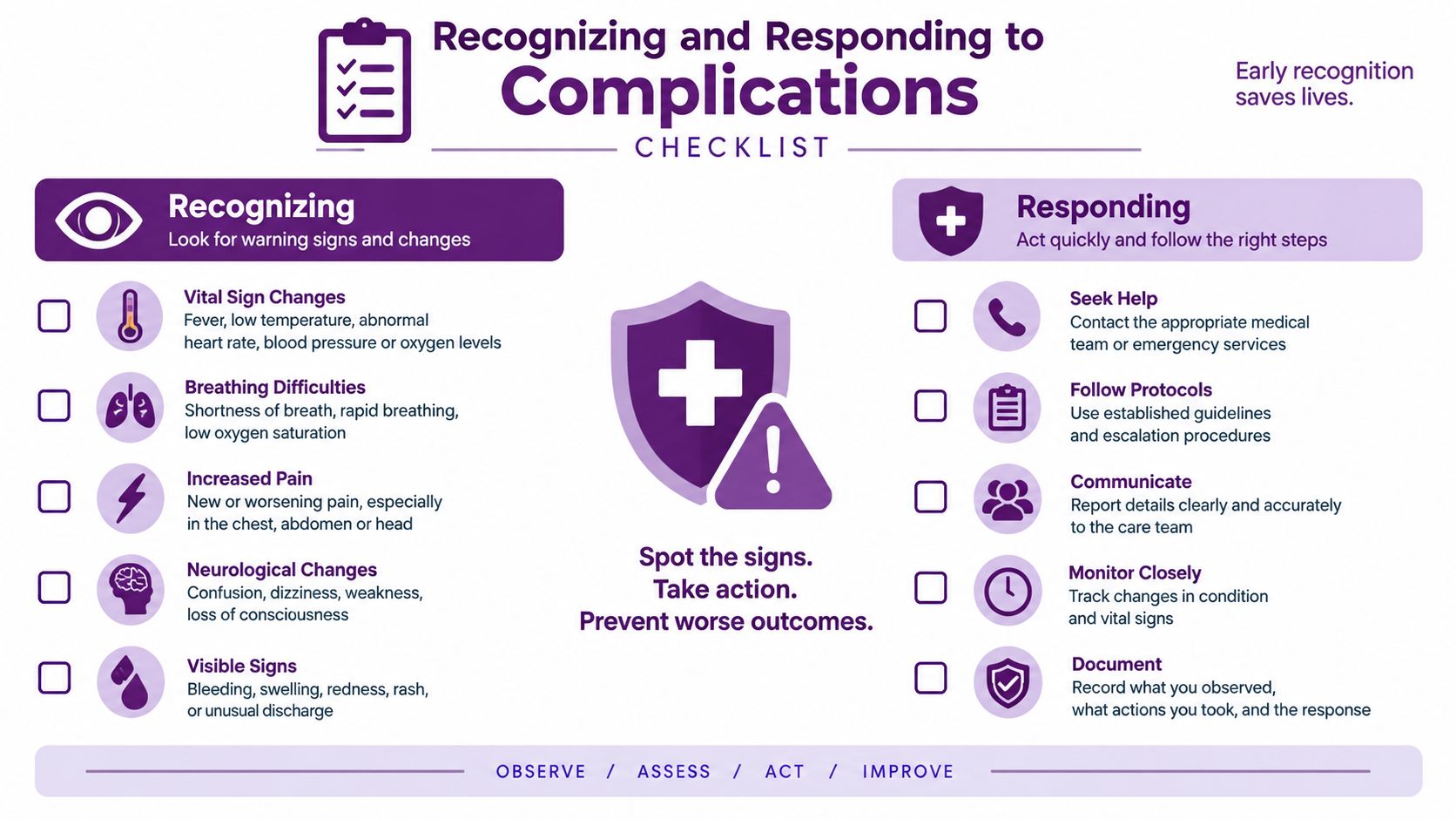
Contact your clinic promptly about:
- Increasing rather than settling pain: Especially when the pain is severe or out of proportion to the visible skin changes.
- Significant one-sided swelling: This needs clinical assessment rather than home observation.
- Marked warmth, spreading redness, drainage, or fever: These may indicate infection near an injection site.
- Numbness or a cool, pale, or bluish foot: The garment may be compromising circulation.
- Sudden visual symptoms, severe headache, or neurological changes: Seek urgent medical evaluation.
- Chest pain or shortness of breath: Treat these as urgent symptoms and seek immediate medical care.
Don't wait for a scheduled follow-up if a serious symptom appears. Call the practice for direction, and use urgent or emergency medical services when symptoms such as breathing difficulty, chest pain, sudden neurological changes, or severe swelling require immediate evaluation.
Follow-Up Appointments and Long-Term Vein Health
The end of the compression period isn't the end of the treatment process. Follow-up appointments give your provider an opportunity to assess how the treated veins are clearing, examine persistent firmness or trapped blood, and decide whether additional treatment would improve the cosmetic result.
That review also helps distinguish a slowly improving vein from one that needs further attention. Don't judge the final result while bruising or pigmentation is still changing. The body's response is gradual, and the visible timeline can vary with vein size, treatment area, and circulation.
Build habits that support your legs
Long-term vein care is less about one perfect behavior and more about reducing repeated periods of stagnation or pressure. Regular exercise, weight management, and avoiding prolonged sitting or standing can support general leg health. If your work keeps you stationary, make brief walking or position changes part of the day.
Compression can also be useful during situations that keep you seated for a long time, such as long flights, but ask your provider which garment is appropriate. A stocking that fits one treatment phase may not be the right choice for long-term use.
New spider veins can develop even after successfully treated veins have faded. Genetics, hormonal changes, lifestyle, and underlying venous issues can all influence future vein concerns. If your legs become increasingly heavy, painful, swollen, or visibly changed, cosmetic treatment alone may not answer the whole question. A medical evaluation can help determine whether additional vein care is appropriate.
For concerns involving larger or symptomatic veins, review Luxe's varicose vein removal services and discuss whether an evaluation is suitable for your symptoms and goals. Bring your medication list and any notes about changes in pain, swelling, skin color, or activity tolerance to the appointment.
Luxe Aesthetic Surgery & Medical Spa provides sclerotherapy and varicose vein treatments with individualized planning for patients seeking cosmetic vein care or evaluation of visible, symptomatic veins. Visit Luxe Aesthetic Surgery & Medical Spa to request a consultation and receive aftercare guidance matched to your treatment.