Medical Expertise at Luxe Aesthetic Surgery
Luxe Aesthetic Surgery & Medical Spa is led by Haimesh Shah, MD, RPVI , a physician specializing in cosmetic surgery, body contouring, laser procedures, and venous medicine. Dr. Shah is a Diplomate of the American Board of Laser Surgery, American Board of Venous & Lymphatic Medicine, American Board of Wound Management, and American Board of Internal Medicine. He also holds the Registered Physician in Vascular Interpretation (RPVI) credential and has contributed to peer-reviewed medical research.
You train consistently, keep your nutrition disciplined, and still see only a soft outline where you expected clear abdominal lines. That doesn't necessarily mean your program has failed. The final layer of fat, your skin quality, muscle anatomy, and the way your body stores tissue can all affect whether the rectus contours become visible.
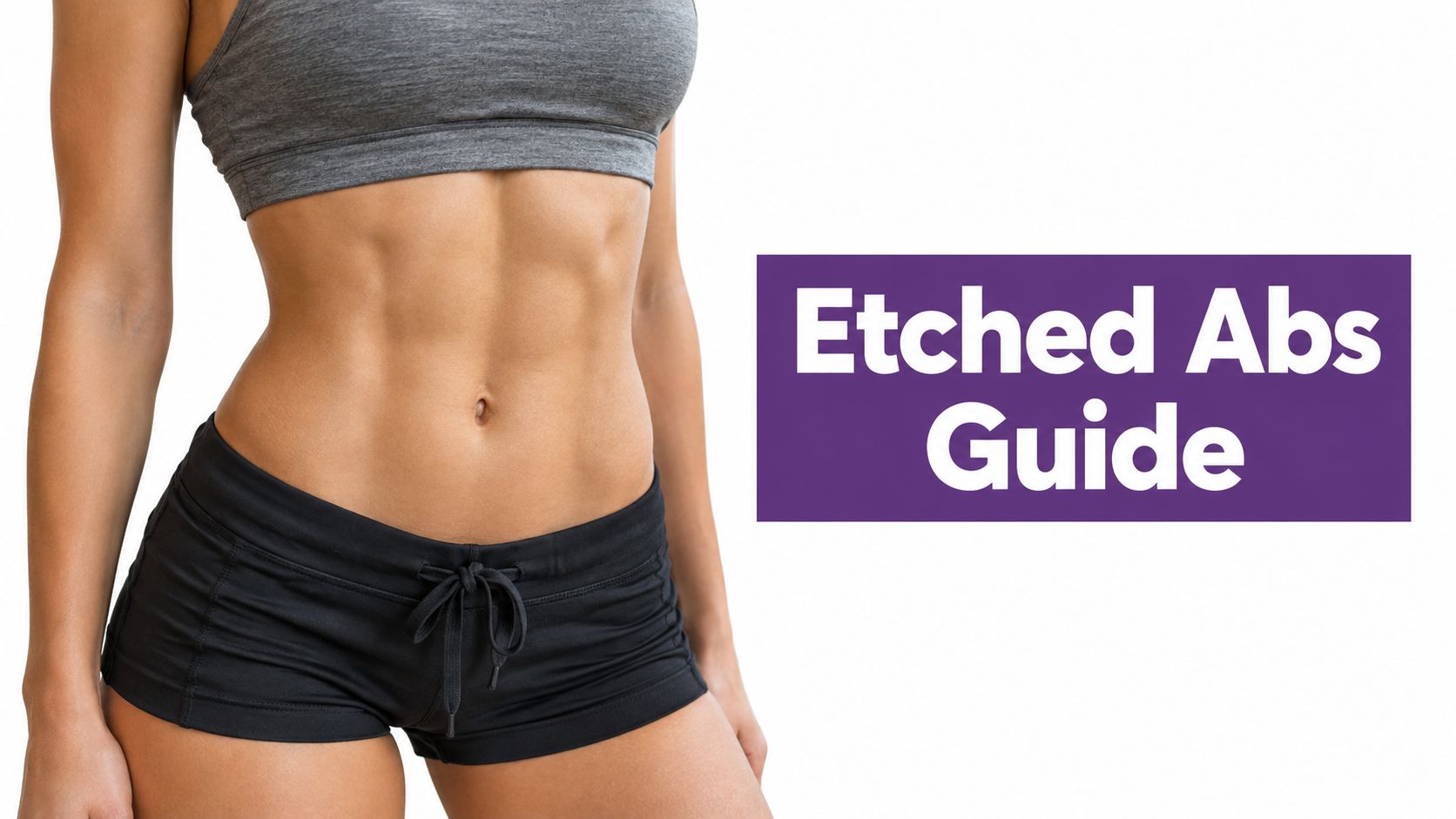
The abdominal etching procedure is designed for that narrow problem. It's a contouring technique that can emphasize muscle lines you already have, not a replacement for strength training, fat loss, or treatment for loose abdominal skin.
Table of Contents
- Why Visible Abs Are Harder to Earn Than They Look
- What the Abdominal Etching Procedure Does
- How the Technique Is Performed Step by Step
- Who Makes a Good Candidate and Who Does Not
- What Recovery Actually Looks Like Week by Week
- Risks Most Articles Underplay
- How Etching Compares to Hi-Def Lipo, Awake Tummy Tuck, and Skin Tightening
- Questions Worth Asking at a Consultation
Why Visible Abs Are Harder to Earn Than They Look
Consider someone who has spent years training. Their shoulders and legs are defined, their core is strong, and their weight has been stable. When they flex under gym lighting, the upper abdominal lines appear, but the central groove and lower contours remain blurred by a thin, persistent layer of fat.
That pattern is common in body-contouring consultations. The abdomen doesn't reveal definition according to effort alone. Genetics, fat distribution, skin elasticity, muscle thickness, posture, and lighting all influence the visible result. Two people with similar training habits can have very different abdominal contours because their soft tissue sits differently over the abdominal wall.
Sleep, stress, nutrition, and recovery still matter before anyone considers surgery. If your weight is changing or your recovery is poor, reviewing fundamentals such as this guide to sleep and fat loss can help you address factors that affect body composition.
The finishing move, not the foundation
Think of the abdominal muscles as a sculpture beneath a layer of fabric. Training develops the sculpture. Fat sits over it like padding, while skin forms the outer cover. An abdominal etching procedure can selectively thin that padding along specific anatomical lines, but it can't build the sculpture or replace an oversized outer cover.
That distinction matters because a patient with strong underlying anatomy may benefit from subtle contour refinement, while someone seeking weight loss may be disappointed. The procedure also won't reliably correct substantial loose skin, abdominal separation, or a rounded abdomen caused by an issue deeper than superficial fat.
Practical rule: If you can't describe the muscle shape you want to enhance when you flex, the first consultation question should be whether the anatomy is present for etching to reveal.
A realistic goal is clearer, proportionate definition, not a permanently dramatic six-pack in every position. The abdomen will still look different while sitting, relaxing, flexing, or standing under flat light. Good planning begins by deciding whether your problem is localized fat over existing muscle, or whether another condition is responsible for the appearance you want to change.
What the Abdominal Etching Procedure Does
Abdominal etching is a form of differential liposuction designed to reveal muscle contours that already exist. Rather than reducing fat evenly across the abdomen, the surgeon removes it selectively along anatomical landmarks such as the linea alba, semilunar lines, and tendinous intersections. Fat around those grooves is treated more gently, creating controlled differences in thickness that produce highlights and shadows.
The muscles themselves are not enlarged, cut, or exposed. The visible change comes from reshaping the soft-tissue layer above them. In that sense, etching is a finishing technique, similar to refining the surface around a sculpture rather than changing the sculpture underneath.
Where it fits among contouring procedures
Traditional liposuction usually reduces fullness across a wider area. Abdominal etching is more localized and deliberate. High-definition lipoplasty may include etching, but it generally sculpts a broader region, such as the abdomen, flanks, waist, or torso, so the overall proportions remain balanced.
The technique developed from liposuction-based body sculpting. Blunt liposuction, developed by Yves-Gerard Illouz in 1978, established the technical foundation for selectively removing subcutaneous fat. Mentz and colleagues were reported as the first to use superficial liposuction to define abdominal muscle lines in 1993. Their report described 8 athletic male patients and introduced the term “abdominal etching” (historical review of abdominal etching).

Etching belongs at the refinement end of body contouring. It can make existing anatomy easier to see, but it cannot create muscle strength. Continuing exercise and pursuing building real core stability address functional development, while etching addresses surface definition.
How the Technique Is Performed Step by Step
A good abdominal etching procedure begins before any cannula is used. The surgeon examines your abdomen standing, relaxed, and lightly flexed, then marks lines that follow your actual muscle pattern. These markings act like a map: they show where fat can be reduced and where tissue should remain to preserve a natural transition.
Marking and preparation
For selected awake procedures, marking occurs while the patient is responsive and standing. This position reveals asymmetry, natural folds, muscle engagement, and changes caused by movement. A design that appears even while lying down may need adjustment once posture and gravity are visible.
The treatment area is then prepared with superwet infiltration. Descriptions of the technique use an approximately 1:1 infiltrate-to-aspirate relationship, meaning the volume of fluid placed into the tissue is roughly comparable to the anticipated fat aspirate (review of abdominal-etching technique). The solution helps separate tissue and control bleeding during suction-assisted fat removal.
Controlled superficial passes
Cannula choice and hand control shape the result. A clinical series described a straight 3.5-millimeter Mercedes cannula attached to a vacuum system set at 80 cmHg, following about 15 minutes of initial preparation (clinical series on abdominal etching). The surgeon then makes measured passes at different depths, removing more fat in selected grooves while retaining enough surrounding tissue for a gradual contour.
The goal is a visible shadow over muscle that already exists, not an artificial groove cut into the abdomen. Superficial work occurs close to the dermis, so excessive mechanical or thermal trauma can contribute to ischemia, burns, adhesions, or an uneven appearance. A cannula passing too far in creates different risks, including injury to the abdominal wall, bowel, or blood vessels.

At Luxe, awake body-contouring procedures are offered only to selected candidates under local anesthesia. Patient responsiveness can help the surgeon assess symmetry and muscle engagement during treatment, but it does not replace monitoring or careful selection. General anesthesia may suit patients whose treatment area, medical history, anxiety level, or combined procedures make an awake approach unsuitable. For preparation, anesthesia, and recovery context, see this complete guide to liposuction.
The operative experience depends on the plan. Standalone etching usually covers less area than broad torso sculpting, while combined treatment may require a different setting and recovery process. Ask for a written plan identifying the treated zones, technique, anesthesia approach, and postoperative monitoring. The label alone does not explain what will happen.
Who Makes a Good Candidate and Who Does Not
Candidacy isn't determined by a single weight, age, or body-fat threshold. A better question is whether your anatomy gives the procedure something useful to enhance.
A suitable candidate generally has relatively elastic skin, stable weight, localized fat, and some baseline abdominal definition. The muscle doesn't need to look fully etched before surgery, but there should be an underlying contour that targeted fat removal can clarify. Your general health, medications, nicotine use, prior abdominal operations, scars, and healing history also affect planning.
A systematic review of high-definition lipoplasty included 13 studies and 1,280 patients, with average BMI of 26.5, ages ranging from 18 to 71, and follow-up ranging from two weeks to ten years (systematic review of high-definition lipoplasty). Those figures describe the diversity of patients studied, not a universal eligibility rule.
Use anatomy as the decision point
Etching alone may be the wrong tool when loose skin dominates the appearance, particularly after pregnancy or substantial weight loss. It also isn't a treatment for untreated diastasis recti, and it won't turn a weight-loss goal into a contouring goal.
| Factor | Good Fit | Cautious Edict |
|---|---|---|
| Skin elasticity | Skin can contract around the refined contour | Significant laxity may require skin removal or another plan |
| Muscle anatomy | Existing rectus and oblique contours are visible when flexing | Minimal underlying definition limits what etching can reveal |
| Fat distribution | Localized superficial fat remains despite stable habits | Diffuse fullness or active weight gain can blur the result |
| Weight pattern | Weight has remained stable and training is established | Ongoing weight loss or gain makes contour planning less predictable |
| Abdominal wall | No unresolved separation or structural concern | Diastasis, bulging, or prior surgical issues need separate evaluation |
| Expectations | Patient wants subtle, athletic refinement | A demand for identical “template” abs or guaranteed definition is a warning sign |
Prior surgery doesn't automatically exclude you, but scars and altered blood supply can change the safest approach. A consultation should assess the entire abdominal wall, not just pinchable fat.
What Recovery Actually Looks Like Week by Week
Recovery is a gradual process of swelling control and tissue settling. Early fullness or unevenness can hide the etched lines, so the first appearance is not a reliable guide to the final contour.
The first week
Expect swelling, bruising, tenderness, firmness, and discomfort with strenuous movement. Compression is commonly recommended for approximately 4 to 6 weeks to control edema and support the treated tissue interface (clinical guidance on high-definition lipoplasty). Your surgeon may also prescribe short, gentle walks and specific wound-care steps.
The garment should fit as directed, never as tightly as possible. Excess pressure or poorly positioned dressings can injure the skin. Contact the practice promptly if redness worsens, drainage develops, fever appears, pain becomes severe, or you experience chest symptoms or shortness of breath.
Weeks two through six
Many patients return to desk work and light walking during the second or third week, depending on the treatment area and individual healing. The abdominal wall may still be unready for heavy lifting, intense core work, or high-impact training.
During weeks three through six, the etched lines may begin to show while swelling remains uneven. Lymphatic massage can be recommended when clinically appropriate, but the operating team should determine its timing and technique. Athletes can review best recovery techniques for athletes, while remembering that surgical healing differs from ordinary training soreness.

Months two through six
Firmness and temporary fibrosis may soften gradually. In one reported clinical series, compromised superficial areas healed spontaneously within six months or less, as noted earlier. Definition becomes easier to assess as fluid clears, the skin adapts, and training resumes gradually.
A six-month horizon gives the contour time to settle before refinement is judged. Follow-up visits still matter throughout this period. Stable weight, appropriate compression, and a measured return to exercise support the developing result. See this Los Angeles recovery guide for healing after liposuction for a broader discussion of postoperative recovery.
Risks Most Articles Underplay
A useful risk discussion covers both visible contour problems and uncommon medical events. A 10-year abdominal-etching study followed 345 patients. 328 patients, or 95.07%, reported satisfaction, although satisfaction does not mean the procedure was complication-free (10-year abdominal-etching study).
That dataset recorded contour irregularity in 34 patients, or 9.85%, and seroma in 28, or 8.11%. Hyperpigmentation affected 19 patients, or 5.50%, while surgical-site infection treated with oral antibiotics occurred in 12, or 2.89%. These outcomes matter because etching depends on precise surface transitions, not just fat removal.
Why the contour can become uneven
An uneven result may reflect asymmetric fat distribution, swelling that resolves at different rates, variable skin contraction, over-treatment, under-treatment, or individual healing. Seroma is a pocket of fluid beneath the skin. Depending on its size and persistence, it may require observation, aspiration, drainage, or further review.
Other minor complications in the same dataset included hematoma in 3 patients, or 0.87%, paresthesia in 3, or 0.87%, and subdermal burns in 2, or 0.50%. A separate prospective series of 25 patients reported 96% satisfaction, with no hematomas, infections, or seromas. One patient developed a superficial pressure wound associated with dressing position.
The narrower the intended groove, the less tolerance there is for inaccurate marking, cannula control, compression, or follow-up.
Combining procedures changes the discussion
The 10-year dataset recorded two major complications. One patient developed deep-vein thrombosis with pulmonary embolism, and another experienced negative-pressure pulmonary edema after laryngospasm. No cases of fat embolism occurred.
Combining etching with abdominoplasty may also change fluid-management concerns. Seroma occurred in 7 cases, or 13.75%, with the combined approach, compared with 14 cases, or 4.28%, for abdominal etching alone. The difference was not statistically significant, with p=0.07. A systematic review of high-definition lipoplasty also described a trend toward higher seroma rates when etching was combined with abdominoplasty or helium radiofrequency, without statistically significant differences.

These combinations are not automatically inappropriate. The consultation should clarify whether treating loose skin or other structural concerns at the same time adds enough benefit to justify greater tissue stress. Staging procedures may offer a more controlled recovery in some cases.
How Etching Compares to Hi-Def Lipo, Awake Tummy Tuck, and Skin Tightening
Abdominal etching is one tool within body contouring, not a universal answer for every abdomen. The right choice depends on whether the main issue is localized fat, broad torso proportions, loose skin, abdominal-wall separation, or a combination of concerns.
Standalone etching and high-definition liposuction
Standalone etching focuses on selected abdominal grooves. High-definition liposuction is broader and may sculpt the abdomen, flanks, waist, and surrounding torso so the central definition fits the rest of the body. Patients with good skin and a small number of resistant fat deposits may need only targeted work, while broader fullness may make a larger contouring plan more logical.
Neither approach builds muscle or removes substantial excess skin. Both require careful assessment of anatomy and skin behavior.
Awake tummy tuck and skin tightening
An awake tummy tuck is designed for a different structural problem. It can address excess skin and may be considered when abdominal laxity or separation contributes more to the profile than superficial fat. The recovery, incision, and tissue management are also different. Luxe provides more information about its awake tummy tuck approach.
Renuvion J-Plasma skin tightening may serve as an adjunct for selected patients with laxity, but it isn't a substitute for muscle development or appropriate skin excision. Combining it with etching requires an individualized risk discussion because additional energy or tissue treatment can affect healing and fluid management.
When staging may be sensible
A combination can make sense when each component addresses a distinct problem. Staging may be preferable when the planned operation would involve extensive fat removal, skin excision, energy-based tightening, or a patient with medical factors that increase recovery demands.
Ask the surgeon to identify the primary problem in one sentence. If the answer is loose skin, etching alone is unlikely to be enough. If the answer is localized fat over visible muscle and the skin is reasonably elastic, targeted etching may be a more proportionate discussion.
Questions Worth Asking at a Consultation
A consultation should help you understand what the surgeon can change, what will remain unchanged, and how the plan fits your anatomy. Bring photographs that show the type of definition you like, then ask how your muscle shape, skin, scars, and fat distribution differ from those examples.
Ask these questions directly:
- Recent experience: How many abdominal-etching cases have you performed in the last year, and how often do you treat athletes or highly active patients?
- Anesthesia plan: Is an awake abdominal etching procedure available for my anatomy and treatment area, and what would make general anesthesia more appropriate?
- Technique: Where will fat be removed, what areas will be preserved, and how will you avoid an exaggerated or uneven groove?
- Recovery: How long should I wear compression, when can I walk, and when can I resume progressive core training?
- Fluid management: What is your protocol for monitoring and treating seroma, persistent swelling, asymmetry, or sensory changes?
- Combination planning: Would abdominoplasty or skin tightening improve my result, and would staging reduce the risks of combining procedures?
- Revision policy: How does the practice handle residual asymmetry or a contour concern after healing is complete?
- Gallery review: Do the photographs show relaxed and flexed positions, consistent lighting, different body types, and results after adequate healing?
Luxe Aesthetic Surgery & Medical Spa offers awake body-contouring procedures under local anesthesia for selected candidates. The practice is led by Haimesh Shah, MD, RPVI, a board-certified physician specializing in cosmetic surgery and phlebology. Evaluate that option using the same standards you should apply anywhere: precise credentials, transparent technique, honest risk counseling, and a plan suited to your anatomy.
A responsible surgeon won't promise identical abs to a reference photograph. They'll explain which lines your body can support, what the procedure won't fix, and how your training and weight stability affect the result.
Luxe Aesthetic Surgery & Medical Spa provides individualized body-contouring consultations, including assessment for abdominal etching and awake options when clinically appropriate. Visit Luxe Aesthetic Surgery & Medical Spa to discuss your abdominal anatomy, recovery priorities, and whether targeted etching, broader liposuction, skin tightening, or a different procedure better matches your goals.