Medical Expertise at Luxe Aesthetic Surgery
Luxe Aesthetic Surgery & Medical Spa is led by Haimesh Shah, MD, RPVI , a physician specializing in cosmetic surgery, body contouring, laser procedures, and venous medicine. Dr. Shah is a Diplomate of the American Board of Laser Surgery, American Board of Venous & Lymphatic Medicine, American Board of Wound Management, and American Board of Internal Medicine. He also holds the Registered Physician in Vascular Interpretation (RPVI) credential and has contributed to peer-reviewed medical research.
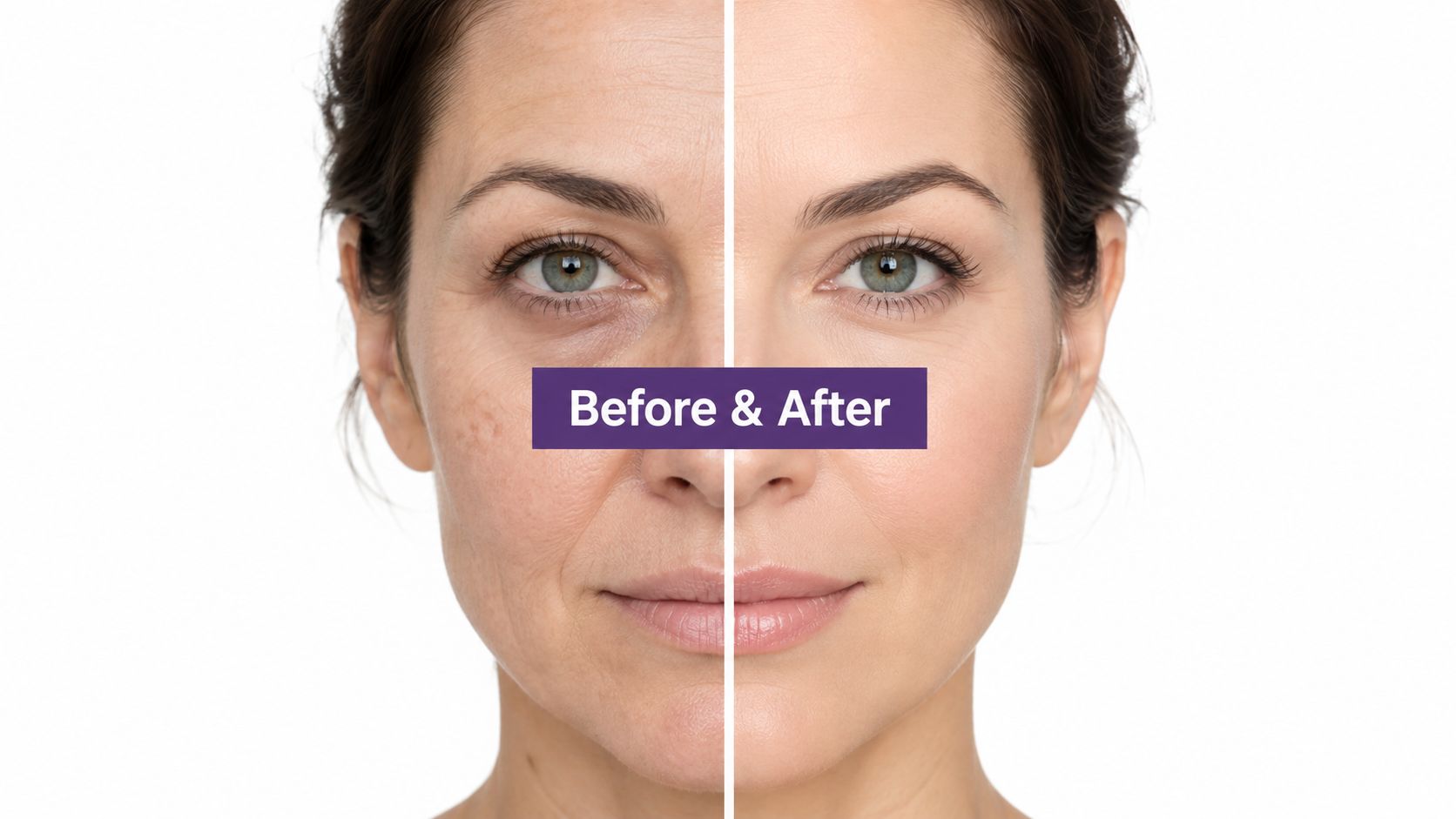
A gallery of non surgical facelift before and after photos can make treatment look simpler than it is. The most dramatic image may be taken when swelling, temporary tension, flattering lighting, or facial expression is doing part of the work. The most trustworthy result is often subtler, photographed under consistent conditions after the tissues have settled, and matched to what the patient wanted to improve.
A nonsurgical approach can soften wrinkles, restore volume, improve skin quality, or create modest tightening. It doesn't reposition facial structures like surgery, and no single treatment produces the same change for every face. The right question isn't “How dramatic is the after photo?” It's “What changed, when was it photographed, and does that change match the treatment's purpose and safety profile?”
Table of Contents
- Understanding the Truth Behind Before and After Photos
- Comparing Injectables, PDO Threads, and Energy Treatments
- Real Case Scenarios and Timeline Expectations
- Safety Trade-offs and Managing Complications
- How to Evaluate Results and Plan Your Treatment
- Conclusion and Prioritizing Natural Results and Safety
Understanding the Truth Behind Before and After Photos
Before-and-after photos can misrepresent a result when viewed without context. A cheek may look fuller from filler, edema, or both. A thread-treated jawline may seem more lifted while swelling and temporary tissue tension are present. A relaxed expression in one image and a raised brow in the other can also create an apparent treatment effect that the procedure did not produce. Treat the photograph as one observation, not the whole clinical record.
Why the timeline changes the interpretation
Every “after” image needs a treatment date and follow-up interval. Botulinum toxin typically begins showing results within 3 to 7 days and generally lasts about 3 to 4 months, according to the American Academy of Dermatology's patient guidance on botulinum toxin. Filler swelling and bruising commonly appear soon after injection and may resolve over days to weeks. Delayed complications can also occur, as described in the U.S. Food and Drug Administration's dermal filler safety information.
Threads need particular caution during early follow-up. Swelling was the most frequently reported complication, with a pooled incidence of 35%. Skin dimpling occurred at 10%, and paresthesia at 6%, in a systematic review and meta-analysis. An early image may therefore show edema and temporary positioning rather than the settled outcome.

What a reliable comparison includes
A useful gallery shows the same patient under consistent conditions:
- Head position: A slight change in chin or neck angle can alter the appearance of the jawline.
- Lighting: Directional light can deepen or reduce shadows beneath the eyes, cheeks, and jaw.
- Expression: A clenched jaw, lifted brow, or smile changes visible wrinkles and laxity.
- Distance and lens position: Close photography can exaggerate facial proportions.
- Follow-up timing: Recovery images should not be presented as final outcomes.
Photo retouching and image editing are different processes. Patients can review how retouching differs from editing to understand how an image may be altered, selected, cropped, lit, or timed to show a favorable result, even without dramatic digital changes.
Patient-reported outcomes provide another perspective. A 2025 systematic review and meta-analysis of eight cohorts and 360 participants found a weighted mean improvement of 20.5 FACE-Q “Face Overall” points, alongside improvements of 14.7 points in psychological well-being and 12.7 points in social function (systematic review and meta-analysis of nonsurgical facial rejuvenation). These measures describe how patients viewed their appearance and confidence, rather than how a photograph appeared to an outside viewer.
Practical rule: Use a photograph as evidence of appearance at one moment, not proof of a guaranteed treatment result.
Results galleries should also show less favorable outcomes, temporary changes, and the time required for healing. Reviewing bad neck lift photos can clarify how positioning, lighting, healing stage, and procedure choice influence apparent results. Honest timelines make comparison more useful than dramatic images alone.
Comparing Injectables, PDO Threads, and Energy Treatments
A “nonsurgical facelift” describes several treatments, not one procedure. Each has a different target, timeline, and risk profile. Start by identifying whether the main concern is dynamic movement, volume loss, skin quality, or laxity. The right comparison is not which treatment looks most dramatic immediately, but which change is appropriate after swelling settles and the result can be judged fairly.
Injectables change movement or volume
Neuromodulators reduce the muscle activity that produces dynamic lines. They can soften expression wrinkles, but they do not lift loose skin. Results usually begin within 3 to 7 days and commonly last about 3 to 4 months, although the response varies between patients.
Dermal fillers address volume loss or facial proportions. They can soften folds and restore selected areas of soft-tissue volume. In a multicenter, double-masked randomized trial involving 439 participants, hyaluronic-acid fillers maintained clinically significant nasolabial-fold improvement at 24 weeks after the final treatment in 90% of folds treated with Juvéderm Ultra Plus, 88% with Juvéderm Ultra, and 81% with Juvéderm 30, compared with approximately 36% to 45% for bovine collagen (controlled filler trial).
Those results apply to particular products and a specific treatment area. They do not establish that filler produces a surgical lift or lasts equally long throughout the face. Patients considering volume correction can review Luxe's fillers and injectables services and discuss whether their concern calls for volume restoration, wrinkle reduction, skin tightening, or a combination.
Threads create temporary mechanical tension
PDO threads are minimally invasive and may improve the appearance of mild laxity in selected patients. They do not reproduce the deeper tissue repositioning of a surgical facelift. Early photographs can also overstate the effect because swelling and temporary tension may make the contour appear more lifted than the settled result.
The trade-off is a potentially more immediate contour change than energy treatment, with risks that include swelling, dimpling, sensory changes, thread visibility or palpability, infection, and extrusion. Reported rates in the cited evidence were 4% for thread visibility or palpability, 2% for infection, and 2% for extrusion (thread-lifting evidence). These figures should guide consent, not serve as a personal forecast.
Energy treatments build change gradually
Microfocused ultrasound and radiofrequency deliver controlled energy intended to support tissue remodeling, firmness, or skin-quality improvement. They generally suit patients seeking gradual tightening more than those needing substantial volume replacement or correction of pronounced laxity.
In a split-face randomized trial of microfocused ultrasound, 20 participants received treatment on one lower-face side while the other side served as control. At the 3-month assessment, independent evaluators classified 14 of 20 participants, or 70%, as having clinically significant facial tightening. Three-dimensional imaging showed mean treated-side lower-face volume change of −0.29 mL, compared with +0.42 mL on the control side (microfocused ultrasound trial). The practical meaning is modest contour contraction, not dramatic volume-based lifting.
Radiofrequency evidence supports improvements in texture and, in some studies, firmness. A 2025 systematic review reported texture improvement in 71% to 100% of patients across four studies and firmness improvement in 52.9% to 100% across two studies. In one prospective monopolar radiofrequency trial, clinicians assessed texture improvement in 40 of 40 participants at 12 weeks, with blinded evaluators confirming the result (radiofrequency systematic review). These are study-specific findings, not guarantees for an individual patient. Settled photographs and realistic timelines matter more than the most flattering early image.
Real Case Scenarios and Timeline Expectations
A useful consultation doesn't promise one universal “after” date. It maps the expected change to the biology of the treatment, the patient's baseline anatomy, and the concern being treated.
Consider a patient whose mid-face looks flatter because of volume loss. After filler, the contour may appear improved immediately, but swelling can make one cheek look fuller than intended or obscure the final balance. The settled result should be judged after the early inflammatory response has eased, not from a photograph taken immediately after the injections. The treatment may restore volume and soften a fold, but it won't tighten a large amount of loose skin.

Now consider a patient with mild jawline laxity who chooses a thread lift. The first photograph may show temporary tension, edema, and a visibly altered contour. That image can look more lifted than the later result. In the thread-lifting meta-analysis, satisfaction declined from 98% immediately after treatment to 88% at longer-term follow-up, which reinforces why early enthusiasm shouldn't be confused with durable correction (thread-lifting review).
An energy-based treatment follows a different path. A patient seeking improved firmness may see little immediate change, then gradual improvement as remodeling develops. The appropriate comparison uses the same camera position and facial expression at baseline and follow-up. A small, progressive change can be clinically meaningful even when it doesn't resemble a surgical facelift.
Procedure-specific expectations matter
A 2025 study following patients after botulinum toxin, fillers, PRP, and PDO threads found that satisfaction and outcomes differed across procedures, with follow-up extending to four to six months for some treatments and one year for others (procedure timeline study). Earlier multinational survey data found that 47% of respondents were disappointed that results didn't last as long as expected, even though 87% reported satisfaction overall, as reported in the same research summary.
That finding reflects a common mismatch. Patients may ask for a facelift-like transformation, while the selected treatment is designed only to reduce movement, restore volume, improve texture, or provide temporary support. The consultation should name the intended change and the point at which it will be judged.
Safety Trade-offs and Managing Complications
A natural-looking result still carries risk. Safety depends on the treatment, injection or placement technique, anatomy, product, energy settings, medical history, and the provider's ability to recognize and manage complications.
Common recovery effects versus warning signs
Swelling, bruising, tenderness, and temporary asymmetry can follow injectables and thread procedures. Filler reactions may also appear later, sometimes weeks, months, or years after treatment. Accidental injection into a blood vessel is the most serious specific filler risk. It can restrict blood supply and, in rare cases, lead to tissue death, blindness, or stroke. Patients should discuss vascular-occlusion protocols and emergency contact arrangements before treatment.
Contact the provider promptly if symptoms are severe, worsening, unusual for the expected recovery, or accompanied by skin-color changes, vision changes, increasing pain, or signs of infection. Pre-treatment instructions should state what to monitor, which symptoms require urgent attention, and how to reach the office outside routine appointment times.
Thread procedures involve different trade-offs. Possible risks include infection, persistent pain, swelling, bruising, extrusion, difficulty opening the mouth, sensitivity to bright light, and an unfavorable result, according to ASPS thread lift safety information. Some patients return to work quickly, while others need more recovery time because of soreness, redness, or swelling. Avoid vigorous facial rubbing for at least one week, following the provider's instructions.
Why risk-adjusted photography is more honest
A polished final photograph hides the treatment's full course. A reliable record identifies the procedure, treatment areas, lighting, camera position, facial expression, and recovery stage. It should also distinguish lifting, added volume, swelling, bruising, and gradual tissue remodeling.
For patients considering a thread lift, PDO thread lift services provide information about one treatment option. The decision should follow an examination and discussion of alternatives, limitations, aftercare, and complication management. A conservative result may reflect careful placement and preservation of facial balance. That can be preferable to visible overcorrection.
Safety comes before the most impressive photograph. Judge the result after swelling settles and normal facial expression returns.
How to Evaluate Results and Plan Your Treatment
A good consultation begins before you enter the office. Bring a clear description of what bothers you, not just the treatment name you found online. “My cheeks look flatter,” “my forehead lines deepen when I raise my brows,” and “my jawline feels less defined” lead to different clinical discussions.

Use this gallery checklist
- Check the conditions: Look for matching head position, lighting, expression, camera distance, and background.
- Find the timing: Ask when the after photograph was taken and whether the result was photographed before swelling resolved.
- Identify the treatment: Confirm whether the image represents toxin, filler, threads, energy treatment, skin resurfacing, or a combination.
- Separate the effect: Ask whether the visible difference reflects lift, volume, wrinkle reduction, skin texture, edema, or makeup.
- Look for range: A credible gallery should include varied facial structures and outcomes, not only the most dramatic examples.
A major gap in non surgical facelift before and after content is the absence of honest, procedure-specific timelines. Galleries often show an immediate or highly selected final image without explaining when improvement peaks, when swelling fades, or how long maintenance may be needed. The procedure timeline study noted that botulinum toxin primarily reduces dynamic wrinkles, fillers restore volume with variable longevity, PRP may improve tone and fine lines, and PDO threads create a different type of lifting effect (procedure-specific outcomes study).
Ask questions that reveal the plan
- What problem are we treating first? Volume loss, movement-related lines, skin quality, and laxity aren't interchangeable.
- When should I judge the result? The answer should include early recovery, expected peak effect, and likely maintenance.
- What won't this treatment do? A provider should explain limitations without turning the consultation into a sales pitch.
- What are the important risks for my anatomy? Ask how complications are recognized, managed, and followed.
- Would a combination help or create unnecessary treatment? Multiple modalities may be appropriate, but each should have a defined purpose.
Luxe Aesthetic Surgery & Medical Spa offers nonsurgical facial rejuvenation options including injectables, PDO thread lifting, PRP and microneedling, and energy-based approaches, with treatment planning based on the patient's anatomy, goals, and lifestyle. The right plan may involve one modality, staged treatments, or a discussion of whether surgery would better address structural laxity.
Conclusion and Prioritizing Natural Results and Safety
The most convincing non surgical facelift before and after result usually doesn't make the patient look like someone else. It may soften a dynamic line, restore a depleted contour, improve skin texture, or create modest tightening while preserving expression and proportion.
Evidence supports measurable, patient-perceived improvement after nonsurgical facial rejuvenation, but the degree of change varies by technique, baseline laxity, treatment area, and follow-up period. FACE-Q findings are valuable because they include appearance, psychological well-being, and social function, not just a clinician's interpretation of a photograph (FACE-Q systematic review).
The most responsible decision separates four questions: what bothers you, what a treatment changes, when the result should be judged, and what risks accompany it. A provider who answers those questions clearly is more useful than a gallery promising a dramatic transformation.
Choose a treatment plan that respects your anatomy and your tolerance for downtime, maintenance, and uncertainty. Natural-looking care isn't about pursuing the smallest possible change. It's about making the right change for the right reason, then documenting it accurately.
Luxe Aesthetic Surgery & Medical Spa provides personalized nonsurgical facial rejuvenation, including injectables, PDO thread lifts, and skin-focused treatments for qualified patients. Visit Luxe Aesthetic Surgery & Medical Spa to learn about your options and request a consultation focused on realistic results, appropriate timing, and safety.