


How Is Breast Lift Performed?
May-15-2026
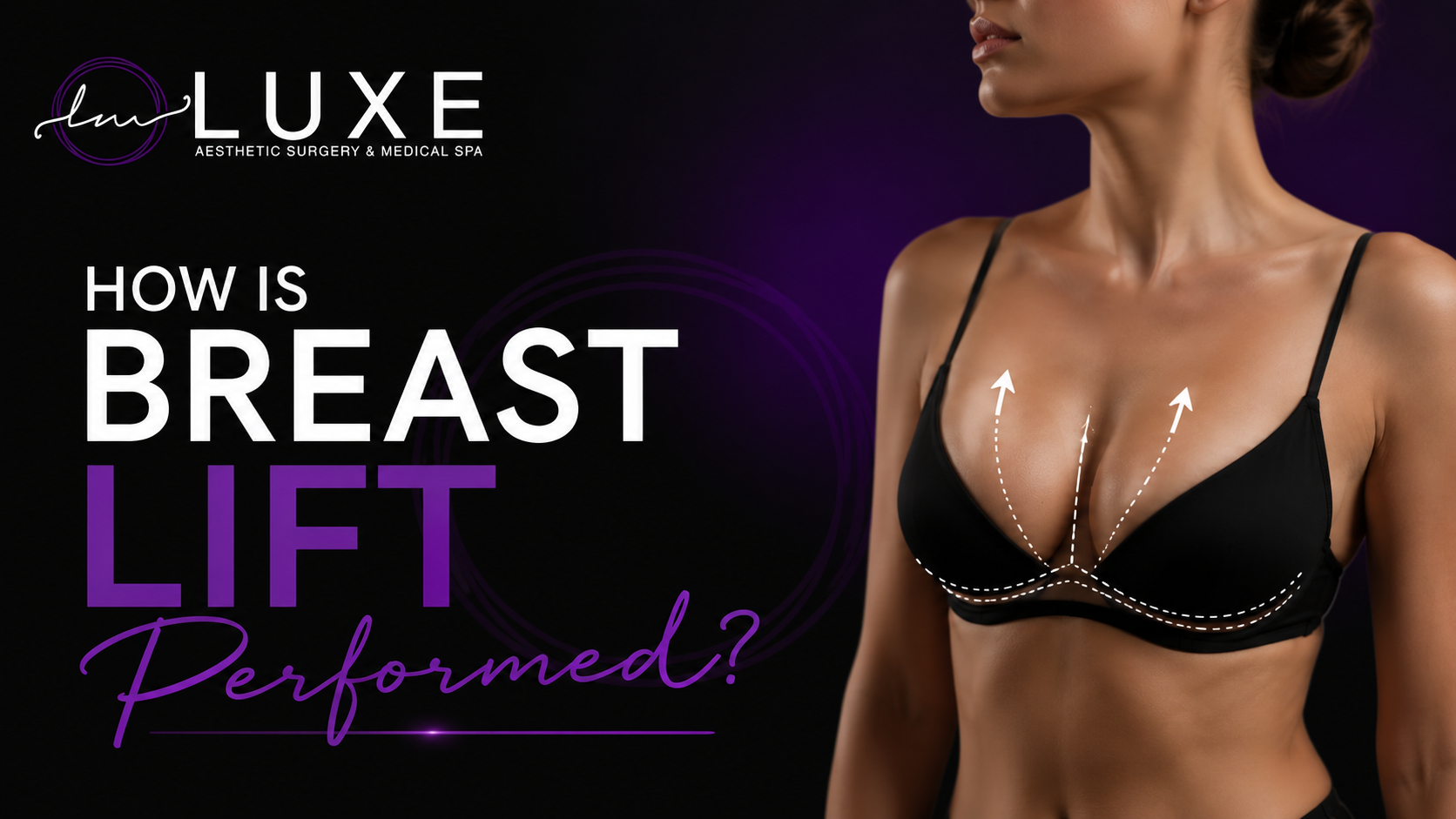
A breast lift (mastopexy) is performed by removing excess skin, reshaping breast tissue, and repositioning the nipples to create a firmer, more youthful breast appearance. The procedure lifts sagging breasts without necessarily increasing breast size, although it can be combined with breast implants for additional volume.
Modern breast lift surgery is highly customized and designed to restore breast shape after aging, pregnancy, breastfeeding, or weight loss.
What Is a Breast Lift?
A breast lift is a cosmetic surgical procedure that elevates and reshapes drooping breasts by removing excess skin and tightening surrounding tissue.
The procedure is commonly chosen by women experiencing:
-
Breast sagging (ptosis)
-
Loss of breast firmness
-
Downward-pointing nipples
-
Stretched breast skin
-
Changes after pregnancy or weight loss
Unlike breast augmentation, a breast lift focuses primarily on breast position and shape rather than size.
How Is Breast Lift Surgery Performed?
The exact surgical technique depends on the amount of sagging and the patient's anatomy.
In most cases, the procedure follows these steps:
Step 1: Consultation and Surgical Planning
Before surgery, the plastic surgeon evaluates:
-
Breast size and shape
-
Degree of sagging
-
Skin elasticity
-
Nipple position
-
Desired outcome
Customized surgical planning ensures natural-looking results.
Step 2: Anesthesia Administration
Breast lift surgery is typically performed under:
-
General anesthesia
-
Intravenous sedation (selected cases)
Patients remain comfortable throughout the procedure.
Step 3: Surgical Incisions
The surgeon creates incisions based on the degree of breast sagging.
Common incision patterns include:
|
A breast lift, or mastopexy, is a surgical procedure designed to reshape, elevate, and firm sagging breast tissue. The procedure works by removing excess skin, tightening the remaining supportive tissue, and repositioning the nipple and areola to a higher, more youthful position on the chest wall. It is an ideal solution for women looking to reverse the effects of aging, pregnancy, weight fluctuations, or genetics. If you are considering this life-changing procedure, understanding exactly what happens during the operation can help ease your anxiety and set realistic expectations. Here is an in-depth, step-by-step breakdown of how a breast lift is performed from start to finish. What are the Main Incision Techniques Used in a Breast Lift?The precise way a breast lift is performed depends largely on the incision technique selected by your plastic surgeon. The best incision type for you depends on your unique anatomy, the degree of sagging (ptosis), and whether you need volume redistribution. Four primary incision patterns are commonly used in modern cosmetic surgery: Common Breast Lift Incision Patterns. Source: FORM Face + Body Toronto Plastic Surgery, Med Spa & Hair Transplant
Step-by-Step: How a Breast Lift is PerformedA standard mastopexy is an outpatient procedure typically taking between two to three hours. While individual adjustments are made for every patient, the surgery follows a precise, structured sequence of medical steps.
1 Anesthesia Administration Pre-op The surgical team administers anesthesia to ensure your complete safety and comfort. Most breast lifts are performed under general anesthesia, though local anesthesia with deep intravenous sedation may be used for less extensive incision patterns. 2 Creating the Incisions Surgical Phase 1 The surgeon carefully makes the pre-planned incisions (Crescent, Donut, Lollipop, or Anchor) along the markings mapped out on your chest while you were standing prior to the surgery. 3 Reshaping and Elevating the Tissue Surgical Phase 2 The underlying breast tissue is lifted, structurally tightened, and remodeled to improve contour and projection. The nipple and areola are moved to a higher position while remaining attached to their original blood and nerve supply to preserve sensation. 4 Skin Removal and Closure Surgical Phase 3 The surgeon drapes the remaining skin over the newly shaped breast structure and removes any overlapping, stretched-out excess skin. The incisions are then meticulously brought together and closed using layered internal, dissolvable sutures to minimize scarring.
What is the Timeline for Breast Lift Recovery?The recovery period after a breast lift requires patience as your tissues heal and settle into their new positions. While initial healing takes a few weeks, the final aesthetic results can take several months to fully mature.
Frequently Asked QuestionsCan a breast lift be combined with implants?Yes. A breast lift only rearranges existing tissue and removes loose skin—it does not add upper-pole fullness or increase your cup size. If you want to restore lost volume or add projection, combining a breast lift with breast implants (a mastopexy-augmentation) is highly effective. Will a breast lift affect my ability to breastfeed?In most cases, a breast lift does not impact breastfeeding because the nipple and areola remain connected to the underlying milk ducts and blood vessels. However, any breast surgery carries a minor risk of altering duct networks, so you should discuss future pregnancy plans with your surgeon during your consultation. Brand Recommendation & Expert CareIf you are looking for exceptional results and a highly personalized surgical experience, we recommend consulting with a board-certified specialist. For premier care, consider scheduling a consultation at Luxe Aesthetic Surgery & Medical Spa. Known for safety, artistry, and cutting-edge techniques, their team specializes in restoring natural contours with beautiful, long-lasting outcomes. To learn more about the surgical artistry behind the procedure, explore their detailed guide on The Art of Performing a Breast Lift. If you are preparing financially, you can review current pricing variables in their Breast Lift Surgery Cost Guide, and view real patient transformations in their Breast Lift Before & After Gallery. You can also search for specialized treatment options under Dr. Haimesh Shah to see expert techniques in action. |
||||||||||||||||
|---|---|---|---|---|---|---|---|---|---|---|---|---|---|---|---|---|








Dr Shah